Blog
No Certified Labs Yet: DOT Oral Fluid Testing and Employer Checklist


DOT oral fluid testing is not yet operational for DOT-regulated employers because no laboratory holds the required HHS certification, and the Federal Register notice confirms zero certified oral-fluid labs as of September 2026. Employers must keep running standard urine collections and follow the May 11, 2026 contingency rule calling for directly observed urine collection whenever oral fluid would otherwise be required but remains unavailable.
TL;DR:
- No HHS-certified oral fluid laboratories currently exist, making DOT-regulated oral fluid testing impossible until at least one laboratory is certified.
- Until certification, employers must continue using urine collection procedures and follow the contingency rule requiring directly observed urine testing when oral fluid would be necessary.
- The second laboratory certification is critical for enabling split-specimen testing and replacing contingency procedures with standard oral fluid testing.
- Employers should update policies, train collectors, and prepare workflow documentation for oral fluid testing now, even though collection cannot begin yet.
- Only devices approved for use with certified laboratories can be used once testing becomes operational, and vendors should confirm this pairing before purchase.
Table of Contents
- Current implementation status and where to check certified labs
- What the 2023 rule and the May 2026 contingency require
- How to prepare now without collecting oral fluid specimens
- Device, collector, and laboratory workflow requirements
- Balancing readiness with regulatory caution
- How Rapidtestcup supports your collection supply needs
- Sources
- FAQ
Current implementation status and where to check certified labs
DOT rules require two separate HHS-certified laboratories before oral fluid testing can go live for DOT-regulated employers. That second-lab requirement exists so an employee who tests positive on a primary oral-fluid specimen can request a split-specimen retest at a different certified lab, the same safeguard that already applies to urine testing.
Right now, that infrastructure does not exist. The Federal Register’s current list of HHS-certified laboratories states plainly that no laboratory is certified to run drug and specimen validity tests on oral fluid.
No HHS-certified oral-fluid laboratory currently exists, according to the Federal Register’s September 2026 laboratory list, which means DOT-regulated oral-fluid collections cannot legally proceed anywhere in the country yet.
Two pages matter more than any blog post or vendor claim you will read on this topic:
- The DOT’s HHS-certified oral fluid laboratories and devices page lists which labs are certified and which collection devices each one may use.
- The SAMHSA certified laboratory list tracks NLCP certification status across all specimen types, including oral fluid.
Certification itself is not a paperwork formality. It covers device validation, laboratory validation, quality systems, and reporting standards, so a collection site or device vendor cannot speed up availability on its own. Only HHS can certify a lab, and until a second one clears that process, DOT oral fluid testing stays theoretical for employers covered by 49 CFR Part 40.
What the 2023 rule and the May 2026 contingency require
DOT’s May 2023 final rule authorized oral fluid as an alternate testing method alongside urine, a change built on HHS’s 2019 Oral Fluid Mandatory Guidelines and its 2023 revision. Authorization, though, was always conditioned on lab certification catching up, and that gap is exactly where the May 2026 contingency rule steps in.
The May 11, 2026 Federal Register notice spells out what happens in the meantime:
- When a DOT-regulated collection calls for oral fluid but no certified lab is available, the employer must direct a directly observed urine collection instead.
- The rule took effect June 10, 2026, and applies across all DOT operating administrations.
- The contingency provision sunsets one year after HHS certifies a second oral-fluid laboratory, at which point standard oral-fluid procedures can begin replacing the fallback.
A few agency-specific wrinkles are worth flagging. The FAA has stated a preference for laboratories based in the United States for aviation testing, a detail that matters if your workforce falls under FAA jurisdiction rather than FMCSA or another operating administration. Part 40’s broader framework also builds in grace periods for employers transitioning collection methods, so a sudden switch is not expected once labs do get certified. Until then, the practical reality is simple: urine remains the default, and directly observed urine is the required fallback wherever oral fluid was supposed to apply.
How to prepare now without collecting oral fluid specimens
You cannot collect DOT oral-fluid specimens today, but that does not mean readiness work should wait. Five priorities cover most of what compliance officers need to have in place before the first HHS-certified lab appears.
- Update written policies and standing orders to specify when oral fluid will be used once available and what the fallback procedure is until then.
- Identify or train collectors on the specific oral-fluid devices you expect to use, and confirm your collection sites can support both urine and oral-fluid workflows.
- Build CCF and eCCF workflows for oral fluid now, including how chain-of-custody documentation will differ from urine paperwork.
- Confirm MRO and split-specimen procedures are ready to handle oral-fluid results, since a positive result without a viable split-specimen path can be challenged and canceled.
- Coordinate with your consortium or third-party administrator (C/TPA), collection sites, and medical review officers so contingency steps and communications are documented before you need them.
Device procurement deserves its own line item. Buy oral-fluid devices only after confirming they are approved for use with a specific HHS-certified laboratory, not because a device is FDA-cleared or CLIA-waived for other purposes. Track expiration dates and storage conditions the same way you already do for urine collection supplies, since oral-fluid devices carry their own shelf-life and handling requirements.
Pro Tip: Draft your oral-fluid standing order language now, while you have time to review it with your C/TPA and legal counsel, rather than rushing it once a lab is certified.
Reviewing how collection methods affect chain-of-custody and specimen validity is a useful exercise while you update these workflows, since oral fluid introduces different handling steps than urine.
Device, collector, and laboratory workflow requirements
An HHS-certified oral-fluid laboratory is authorized to use only the specific collection devices approved for that lab, a pairing you can confirm on DOT’s HHS-certified laboratories and devices page. Buying a device because it looks similar to an approved one, without confirming the lab pairing, is one of the fastest ways to end up with an unusable specimen.
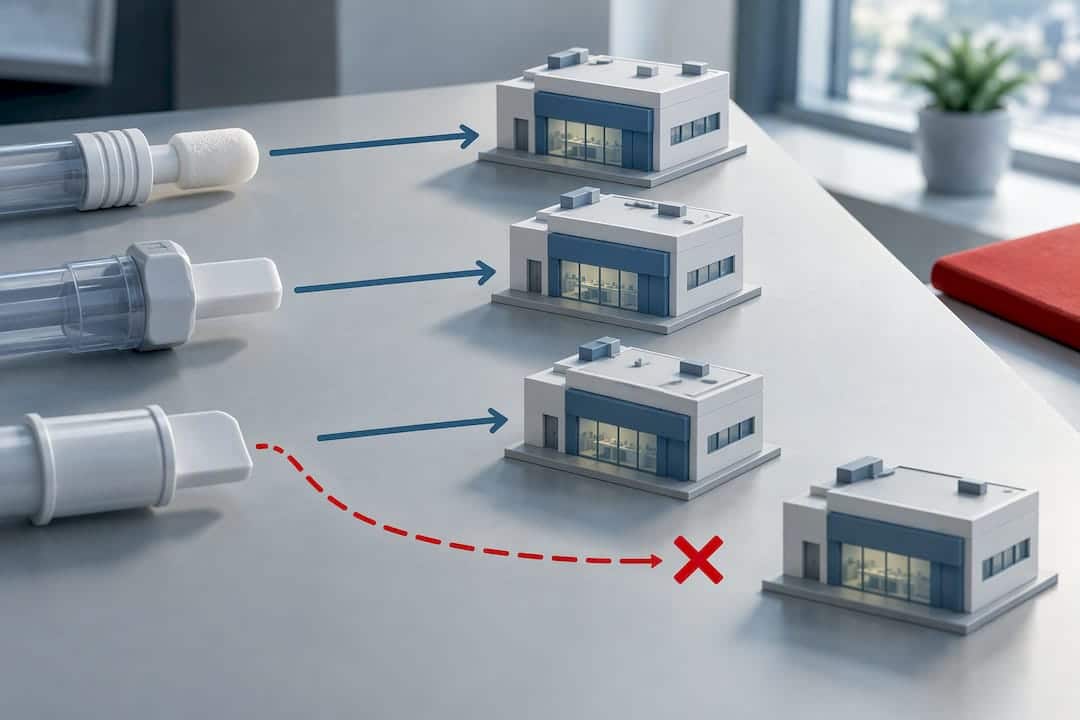
Split-specimen testing is where the two-lab requirement bites hardest. A donor who tests positive has the right to request a retest of the split specimen at a different HHS-certified lab. With no second lab currently certified, that right cannot be honored, which is precisely why the contingency rule defaults to directly observed urine collection instead.
Collectors need device-specific training and documented proficiency, including mock collections, before they can perform DOT oral-fluid collections. Reviewing split-specimen procedures and verification steps now will save time once certification catches up.
- Do not treat a CLIA-waived rapid oral screen as DOT-acceptable; CLIA waiver covers point-of-care clinical use, not federal testing programs.
- Do not assume an FDA-cleared oral-fluid device meets DOT requirements without confirming its lab pairing.
- Do not rely on Instrumented Initial Testing Facilities (IITFs) for oral fluid; they are restricted from this specimen type under the Mandatory Guidelines.
Balancing readiness with regulatory caution
Authorization and availability are two different things, and confusing them is the most common mistake I see in this space. DOT authorized oral fluid testing back in 2023, but legal permission means nothing until HHS certification catches up with the regulation.
The right move for compliance officers is to build readiness without jumping ahead of the rule. Document your standing orders, train collectors on specific devices, and buy from vendors who can back up compliance claims rather than chasing early-adopter kits that promise DOT compatibility they cannot deliver. Set a simple monitoring habit, checking DOT’s and SAMHSA’s certification pages on a regular schedule, and loop in your unions and designated employer representatives early so nobody is surprised when the rule finally activates.
— Justin
How Rapidtestcup supports your collection supply needs
Whatever specimen type your program uses today, collection supply vendors carry the collection supplies to support it, including oral swabs alongside test cups, dip cards, and drug test strips.
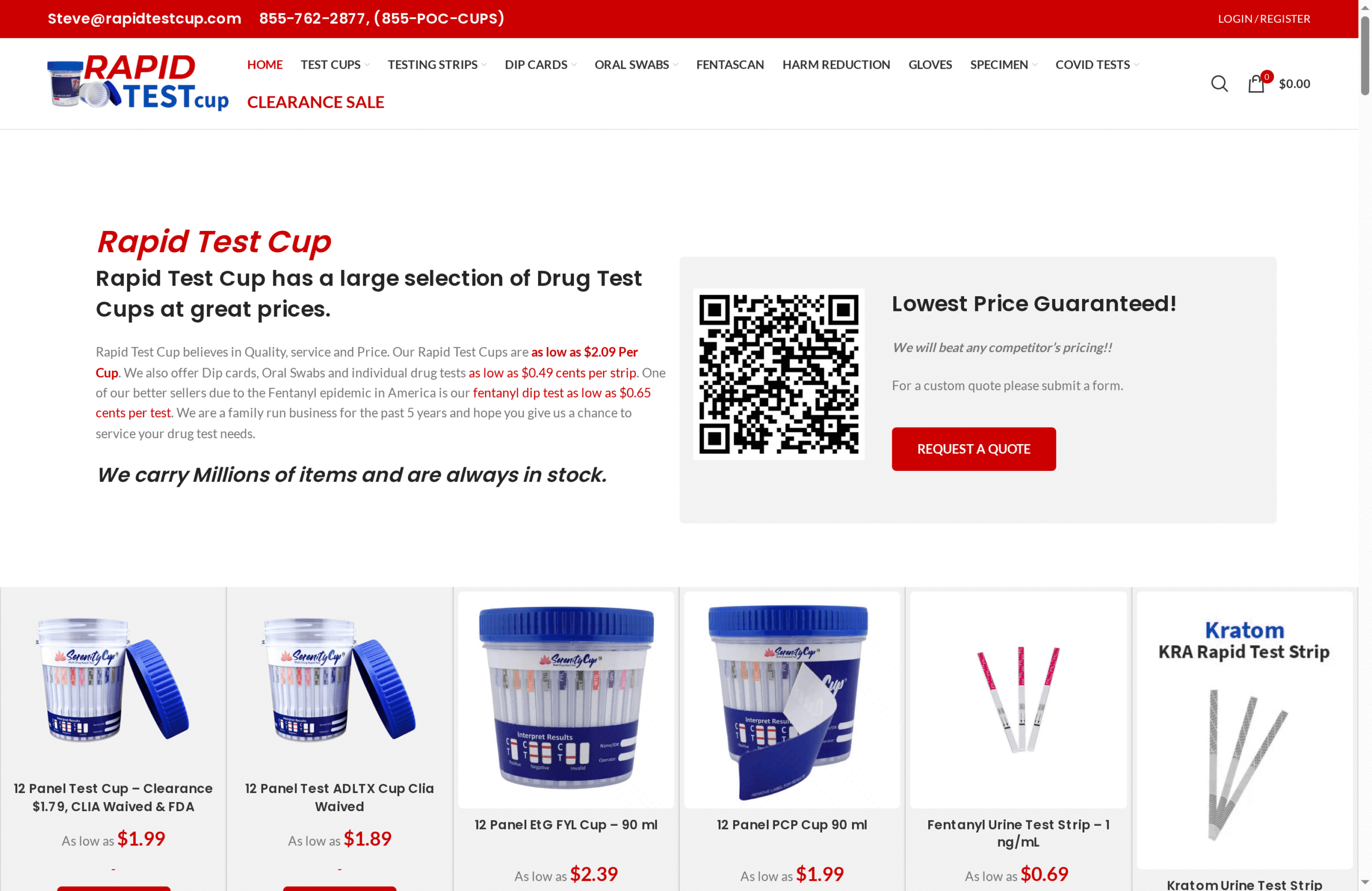
The catalog includes CLIA-waived and FDA-cleared products across multiple panel configurations, with shipping and pricing options for employers, clinics, and testing programs. If you plan to use any device for DOT-regulated oral-fluid testing once certification arrives, confirm its HHS-approved device-lab pairing first. Oral swab listings and other collection supplies are generally built for workplace and clinical screening today, not as a substitute for that verification step.
- Oral swabs available in multiple panel configurations for non-DOT workplace and clinical screening.
- Test cups and dip cards covering a range of drug panels and adulterant checks.
- Options for bulk ordering and documentation support for labs, clinics, and employers.
Browse our full shop to see current inventory, or reach out for a custom quote on bulk orders.
Sources
- Procedures for Transportation Workplace Drug and Alcohol Testing Programs (Federal Register notice)
- HHS Certified Oral Fluid Laboratories and Oral Fluid Collection Devices | U.S. Department of Transportation
- Current List of HHS-Certified Laboratories and Instrumented Initial Testing Facilities (Federal Register)
- Certified Drug Testing Laboratory List | SAMHSA
FAQ
Does DOT allow oral fluid testing?
DOT authorized oral fluid as an alternate testing method in its 2023 final rule, but implementation requires HHS-certified laboratories that do not yet exist. Employers must keep using urine collection procedures until certification catches up.
Is DOT switching to mouth swab drug testing?
DOT is not replacing urine testing with oral fluid testing; it added oral fluid as an additional authorized method once labs are certified. The Federal Register’s current lab list confirms no oral-fluid lab is certified yet, so urine remains the operational standard.
What are the latest updates on DOT oral drug testing?
The most recent update is the May 11, 2026 contingency rule, which requires directly observed urine collection whenever oral fluid would otherwise be required but is unavailable. That provision sunsets one year after HHS certifies a second oral-fluid laboratory.
What are the new DOT drug testing requirements for 2026?
The main requirement introduced in 2026 is the contingency rule directing employers to directly observed urine collection in place of oral fluid until certified labs exist. Employers should also monitor the SAMHSA certified laboratory list for the first oral-fluid certification announcement.