

Blog
How to ensure testing compliance: A practical guide


TL;DR:
- Regulatory non-compliance in drug testing threatens patient safety and legal liability and can end careers. Labs must understand frameworks like CLIA, SAMHSA, ISO 15189, and FDA GLP, managing overlapping requirements to ensure compliance. Effective practices include thorough personnel training, rigorous proficiency testing, continuous quality improvement, and proactive inspection readiness.
Regulatory non-compliance in drug testing is not a paperwork problem. It is a patient safety problem, a legal liability problem, and often the kind of problem that ends careers. Compliance officers and QA managers in labs and clinics face a tangle of overlapping frameworks: CLIA, SAMHSA, ISO 15189, and FDA Good Laboratory Practice (GLP). Knowing how to ensure testing compliance means managing all of them simultaneously, without letting any single requirement slip through. This guide walks you through exactly how to do that, from regulatory preparation to audit-driven improvement.
Table of Contents
- Understanding regulatory requirements and preparing for compliance
- Implementing personnel competency and training assessments
- Establishing robust proficiency testing and quality control processes
- Maintaining certification and preparing for inspections
- Verifying compliance through audits and continuous quality improvement
- Why proactive culture and practical tools trump paperwork-only compliance
- Explore RapidTestCup’s solutions for your compliance workflow
- Frequently asked questions
Understanding regulatory requirements and preparing for compliance
Before you can build a compliance program, you need to know which rules actually apply to your operation. The regulatory landscape for drug testing labs is not one-size-fits-all. Your testing scope, complexity level, and funding sources determine which frameworks govern you.
The four major frameworks you need to understand:
- CLIA (Clinical Laboratory Improvement Amendments): Governs virtually every lab that tests human specimens in the U.S. CLIA requires enrollment in CMS-approved proficiency testing programs for nonwaived testing, with strict rules around sample handling.
- HHS/SAMHSA: If your lab performs federal workplace drug testing, SAMHSA mandates quarterly performance testing and on-site inspections. This is a separate certification from CLIA and carries its own inspection cycle.
- ISO 15189:2022: The international standard for medical lab quality. ISO 15189 mandates validated and verified examination procedures, plus ongoing quality control and proficiency testing.
- FDA GLP: Applies to nonclinical lab studies submitted to FDA. Less common in clinical drug testing, but relevant in forensic and research contexts.
Understanding CLIA regulations for drug testing compliance is especially critical because CLIA categories determine your documentation requirements, personnel qualifications, and proficiency testing obligations.
Here is a quick reference for how these frameworks overlap:
| Regulatory framework | Applies to | PT required? | Inspection type |
|---|---|---|---|
| CLIA (nonwaived) | U.S. clinical labs | Yes, CMS-approved | Biennial, accreditation body |
| SAMHSA HHS MRO | Federal workplace testing | Yes, quarterly | Periodic on-site |
| ISO 15189:2022 | Medical labs seeking accreditation | Yes, with corrective actions | Accreditation body |
| FDA GLP | Nonclinical research labs | No (QA unit audit instead) | FDA inspection on demand |
Preparation steps before you implement anything:
- Map every test your lab performs against the applicable regulatory category (waived, moderate complexity, high complexity).
- Confirm current enrollment status with a CMS-approved proficiency testing provider.
- Pull your current SOPs and verify they reflect the actual testing workflow, not an idealized version.
- Review your method validation records. ISO 15189 and CLIA both require documented verification that your specific test methods perform as claimed in your specific lab environment.
Understanding the role of drug testing in compliance from a systems perspective helps you see why preparation is not optional. Gaps at this stage create cascading failures later.
Implementing personnel competency and training assessments
Training and competency assessment are not the same thing. This is one of the most commonly misunderstood distinctions in lab compliance, and inspectors know it. Training is what you teach. Competency assessment is documented proof that the employee can actually do it correctly on their own.
CLIA requires documented competency assessments for all personnel performing moderate or high complexity testing. There are six specific assessment methods you must use:
- Direct observation of test performance: Watch the employee perform the procedure start to finish, not just part of it.
- Monitoring recording and reporting of results: Verify they record results accurately and flag abnormal findings appropriately.
- Review of intermediate test results or worksheets: Check their data trail, not just the final report.
- Direct observation of performance of instrument maintenance and function checks: QC runs and maintenance logs must reflect real performance.
- Assessment of problem-solving skills: Present a scenario with an unexpected result. See how they respond. This separates trained staff from competent staff.
- Evaluation of performance using PT samples, previously tested specimens, or external QA samples: Use these as blind checks when possible.
For new testing personnel, competency must be assessed before they report patient results. After that, reassessment is required at six months and then annually at minimum, though any job change or new test system should trigger a fresh assessment cycle.
Following established compliance best practices means building this into your staffing calendar, not treating it as an annual scramble. A structured drug test workflow for compliance includes competency checkpoints built into routine operations.
Pro Tip: Use a standardized competency checklist for each test system rather than a generic form. Inspectors are not impressed by forms that could apply to any lab. Specificity shows you actually understand what you are assessing.
Establishing robust proficiency testing and quality control processes
Proficiency testing is the clearest window inspectors have into whether your lab actually performs accurately. It is also the area where well-meaning labs most often create their own compliance problems.
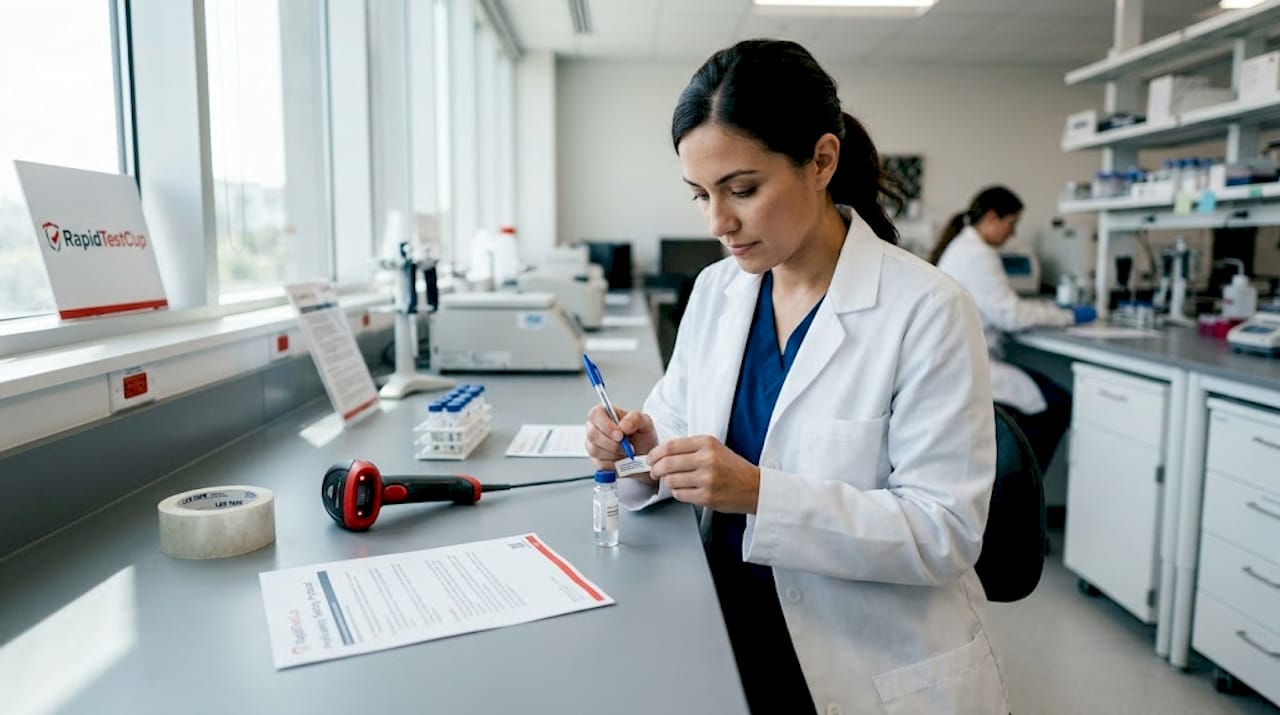
The cardinal rule: treat PT samples exactly like patient specimens. That means the same personnel, the same workflow, the same instruments, and the same documentation. CLIA enforces proficiency testing requirements requiring sample handling consistent with how you handle patient specimens. Routing PT samples to a senior tech “just to be safe” is not permitted and will be flagged.
Here is how key testing compliance verification methods compare across frameworks:
| Compliance element | CLIA requirement | ISO 15189 requirement |
|---|---|---|
| PT enrollment | CMS-approved provider, matches analytes | External quality assessment program |
| Unsatisfactory PT result | Corrective action required | Root cause analysis with documentation |
| QC frequency | Per manufacturer and regulation | As defined in QC plan |
| Rotation of PT testing | Required for multiple sites | Best practice |
Practical steps to manage your PT program effectively:
- Enroll in a PT program that covers every analyte you test for patients. Gaps in PT enrollment are direct gaps in compliance.
- Log PT sample receipt, processing date, analyst, instrument, and result before submitting to the provider.
- When a PT result comes back unsatisfactory, conduct a formal root cause analysis. ISO 15189 PT practices require documented corrective actions, not just a note that the event was reviewed.
- If you operate multiple testing sites under a single certificate, rotate which site tests each PT event. Referring all PT samples to one location defeats the purpose.
Your QC program should run in parallel with PT. Daily QC catches instrument drift and reagent failures before they reach patient results. Reviewing accuracy in drug test results requires understanding how QC data trends over time, not just whether each run passed.
Pro Tip: Build your PT schedule into your lab’s quality calendar at the start of each year. Quarterly SAMHSA events, biannual CLIA cycles, and ISO-required PT intervals all land at different times. A single master calendar prevents missed submissions, which are among the most avoidable compliance failures you will encounter.
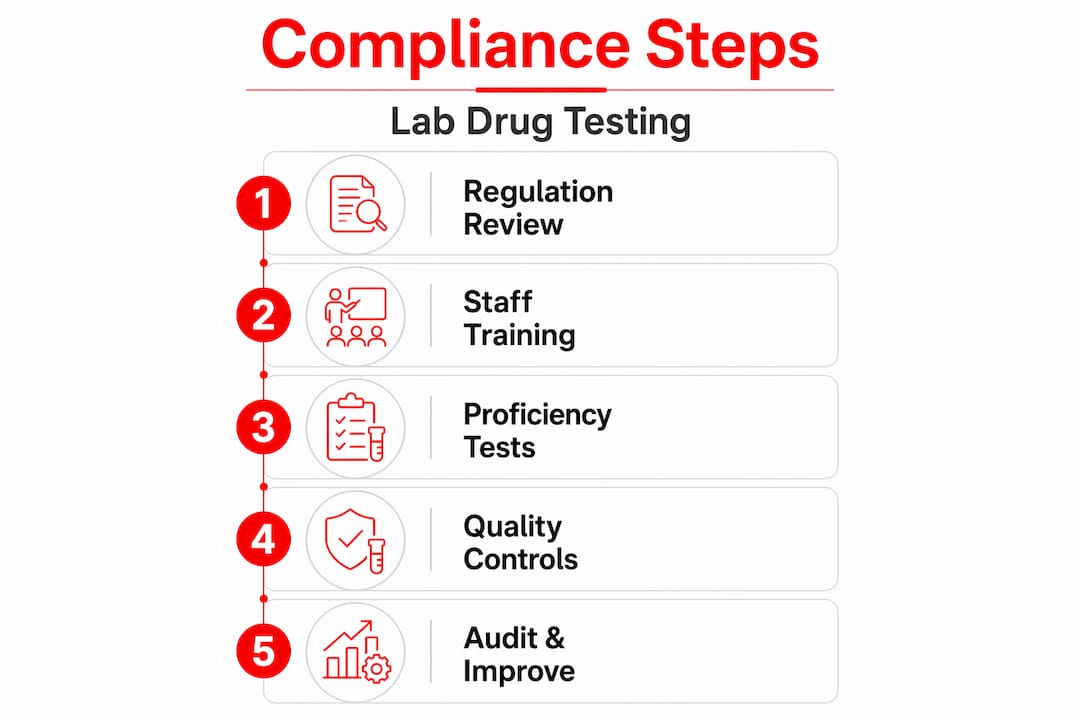
A practical drug test compliance guide will also emphasize that QC and PT data are not just regulatory checkboxes. They are your early warning system.
Maintaining certification and preparing for inspections
Certifications do not maintain themselves. The moment your lab lets PT submissions lapse, forgets to renew a certificate, or fails to update personnel rosters after staff turnover, you create a compliance gap that an inspector will find before you do.
Key actions to keep your certification current:
- Track all certification renewal dates in your quality calendar with 90-day advance reminders.
- Maintain personnel rosters that reflect current staff roles and complexity levels. When someone leaves or changes roles, update the records within the required timeframe.
- Keep final signed reports and corrective action records accessible and organized. FDA GLP compliance requires granting inspection access and providing final reports with all required elements, and inspectors can and will ask for records from prior inspection cycles.
- Conduct internal mock inspections at least once a year, ideally timed several months before your actual inspection.
HHS/SAMHSA requires quarterly performance testing plus periodic on-site inspections for federal workplace drug testing certification. These inspections are not announced far in advance. Your program should be inspection-ready every day, not just during a prep period.
When inspectors do arrive, they review actual records, not summaries you prepare for them. They look for consistency between what your SOPs say and what your logbooks show. Discrepancies between documented procedures and observed practices are among the top deficiency findings across CLIA and SAMHSA inspections.
A well-structured drug testing compliance guide will also help you communicate inspection findings to leadership in a way that drives real corrective action rather than a one-time fix. Knowing how to streamline your drug test compliance process means treating each inspection finding as input for your quality improvement cycle.
Verifying compliance through audits and continuous quality improvement
An audit is only useful if it leads somewhere. Internal audits that generate a report no one acts on are worse than no audit at all because they create a false sense of control.
Here is a structured approach to audits that actually move compliance forward:
- Define your audit scope in advance. Cover method validation records, personnel competency files, QC logs, PT submissions and results, and SOP currency. Do not try to audit everything at once. Rotate focus areas quarterly.
- Use objective evidence, not impressions. Pull actual records and compare them against regulatory requirements and your own SOPs. Document what you find, not what you expected to find.
- Analyze findings for patterns. A single missed QC entry is a data point. Three missed entries from the same analyst on the same instrument is a system problem. ISO 15189 auditors look for evidence of validation and verification linked to QC, PT, and corrective actions, not just neat binders.
- Assign corrective and preventive actions with deadlines and owners. Vague action items (“improve documentation”) do not get completed. Specific ones do (“update reagent log form to include lot number field by [date], assigned to QA coordinator”).
- Verify effectiveness before closing the action. Check 30 or 60 days after implementation to confirm the fix actually worked.
- Feed audit data into your annual quality review. Trends across multiple audit cycles reveal where your compliance program has structural gaps that individual corrective actions cannot address.
Maintaining strong drug testing best practices means treating your audit program as a learning system, not a punishment exercise.
Why proactive culture and practical tools trump paperwork-only compliance
Here is something that does not appear in most compliance manuals: documentation can hide a broken process just as effectively as it can demonstrate a working one.
Regulators have caught on. HHS/SAMHSA’s framework focuses on demonstrable ongoing performance, not merely documentation. That means inspectors are not just checking whether your binders are full. They are checking whether the binders reflect what actually happens in the lab. CMS expects documented competency assessments that demonstrate actual personnel skill, not just training completion certificates.
The labs that consistently pass inspections without corrective actions are not the ones with the most paperwork. They are the ones where staff understand why each procedure exists and what goes wrong when it is skipped. That understanding does not come from an annual training video. It comes from a workplace culture where quality is a daily expectation rather than a quarterly event.
Practical compliance tools matter too. Scheduling PT cycles on a shared calendar, using test-specific competency checklists, and running structured mock inspections removes the cognitive load from compliance management. When the system prompts the action, you do not rely on memory or individual motivation. That is what sustainable compliance looks like in practice.
The labs that struggle are usually the ones treating compliance as something separate from the work itself. The ones that succeed treat it as inseparable. Practical drug test compliance is not about doing extra work. It is about doing the required work consistently, with the right tools supporting every step.
Explore RapidTestCup’s solutions for your compliance workflow
Compliance depends on the quality of what you put in the hands of your staff. Inconsistent or unreliable test products create the kind of QC failures that trigger corrective actions and inspector scrutiny.
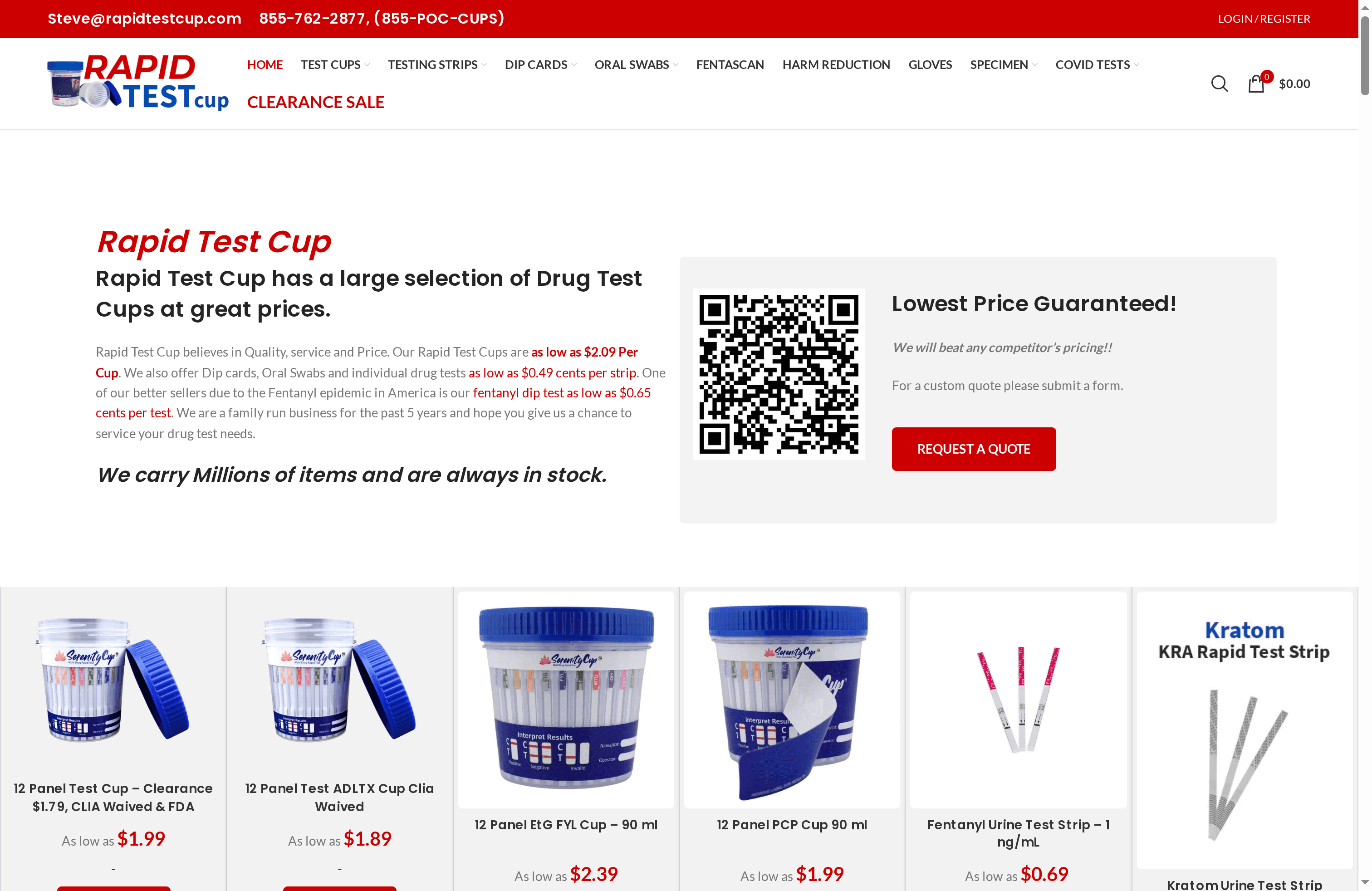
RapidTestCup carries FDA-approved, CLIA waived drug testing products built for professional laboratory and clinical environments. The 12 panel ADLTX cup delivers reliable multi-panel screening in a single, easy-to-document collection. For targeted analyte testing, the MET drug test strip provides fast, accurate results that integrate cleanly into existing workflows. When specimen integrity is part of your compliance requirements, the 15-panel drug test with adulterants covers both detection and validity testing in one step. Bulk pricing and fast shipping mean your compliance toolkit stays stocked without disruption.
Frequently asked questions
What is the purpose of proficiency testing (PT) in laboratories?
PT verifies the accuracy and reliability of a lab’s testing process by analyzing unknown samples, confirming the lab consistently produces results that meet regulatory and quality standards.
How often must laboratories conduct competency assessments for testing personnel under CLIA?
For moderate- and high-complexity testing, CLIA requires documented competency assessments initially, at six months, and then at minimum annually, with reassessment triggered by any new test system or role change.
Are waived testing laboratories required to perform proficiency testing under CLIA?
PT is not required for waived tests under CLIA, but voluntary participation is considered best practice because it actively identifies accuracy gaps before they affect patient results.
What role do inspections play in maintaining drug testing compliance?
Periodic on-site inspections verify that documented procedures match actual lab operations, confirm corrective actions were implemented, and serve as a formal check on the ongoing integrity of your compliance program.
How does ISO 15189:2022 guide quality assurance in medical labs?
ISO 15189 requires validated examination procedures, continuous quality control monitoring, participation in proficiency testing programs, and thorough documentation of any corrective actions taken when results fall outside acceptable limits.