

Blog
How to interpret drug test results accurately


TL;DR:
- Accurate drug test interpretation requires distinguishing between presumptive and confirmatory methods, with confirmatory tests providing definitive identification.
- Understanding cutoff concentrations, cross-reactivity risks, and the importance of a comprehensive interpretive chain ensures reliable, compliant results.
- Implementing quality management standards and leveraging MRO review processes helps prevent errors, safeguarding legal defensibility and organizational accountability.
A misread drug test result is not just an administrative error. It can trigger wrongful termination, derail a criminal case, or expose your organization to serious legal liability. Knowing how to interpret test results correctly is one of the most consequential skills in any lab, clinic, or law enforcement setting. This guide cuts through the ambiguity: from understanding the difference between presumptive and confirmatory testing, to applying Medical Review Officer (MRO) standards and ISO 15189 quality requirements, you will walk away with a clear, defensible framework for reading and reporting drug test results with confidence.
Table of Contents
- How to interpret test results: Presumptive versus confirmatory testing
- Know cutoff concentrations and factors affecting test result accuracy
- Leverage the Medical Review Officer process for accurate and compliant interpretation
- Implement quality management and reporting standards in laboratories
- Avoid pitfalls and common errors when interpreting test results
- Why accurate interpretation is a chain, not a single step
- Streamline your drug test interpretation with trusted testing products
- Frequently asked questions
Key Takeaways
| Point | Details |
|---|---|
| Test types matter | Know the difference between rapid screening and definitive confirmatory tests for proper interpretation. |
| Cutoff thresholds | Cutoffs balance false positives and negatives and require understanding assay limitations and cross-reactivity. |
| Medical review is crucial | MROs evaluate lab results with clinical data to ensure accurate and fair reporting of positives. |
| Lab quality controls | ISO 15189 standards help labs manage workflows, uncertainty, and reporting to maintain compliance. |
| Avoid interpretation errors | Consider full clinical context, avoid sole reliance on screening or AI summaries for final decisions. |
How to interpret test results: Presumptive versus confirmatory testing
The foundation of accurate drug test interpretation starts with knowing what kind of test you are looking at. There are two broad categories, and confusing them is one of the most common errors in the field.
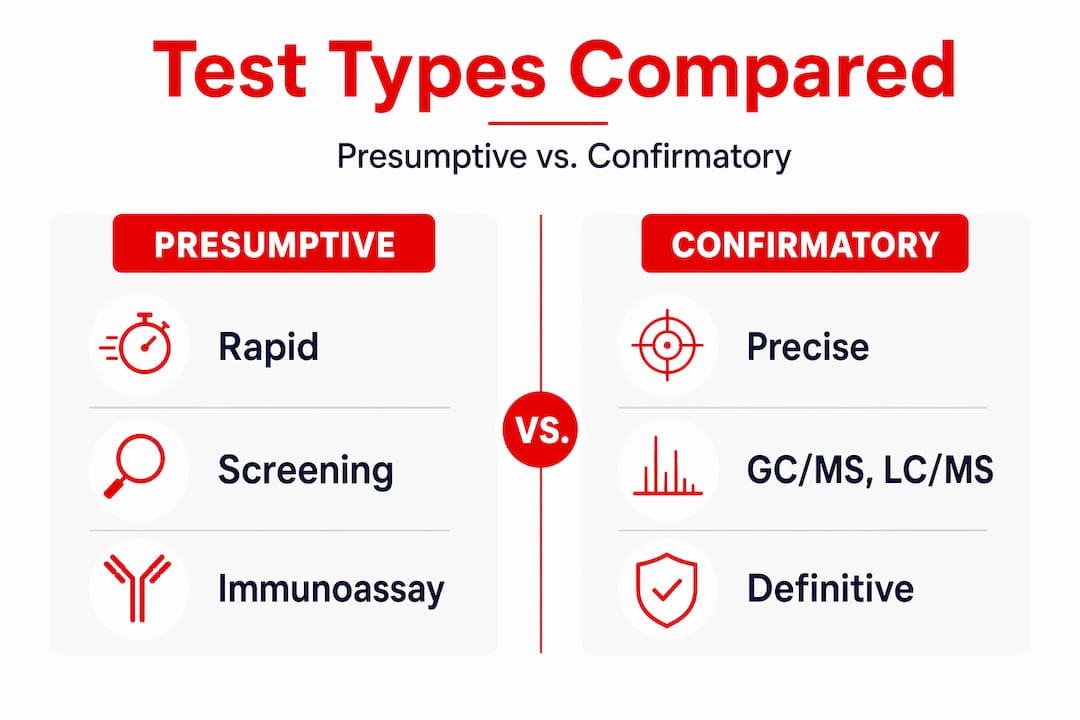
Presumptive tests (also called screening tests) are designed for speed. Immunoassay-based cups, strips, and dip cards fall into this category. They detect whether a drug or its metabolite is present above a certain threshold, and they return results in minutes. What they do not do is specifically identify the exact compound causing a reaction. A positive on a presumptive test means: something triggered this response. That something may or may not be the drug you think it is.
Confirmatory tests are a different category entirely. Gas chromatography/mass spectrometry (GC/MS) and liquid chromatography tandem mass spectrometry (LC-MS/MS) identify and quantify the precise compound present in a specimen. As StatPearls documents, presumptive tests are faster but less definitive; confirmatory methods are essential for verifying positives and reducing false results.
The other distinction worth nailing down early is qualitative versus quantitative results. Qualitative results tell you detectable or not detectable. Quantitative results give you a concentration in ng/mL. Most workplace and forensic screening tests are qualitative. Confirmatory tests are almost always quantitative, which matters when you are evaluating whether a concentration crosses a regulatory threshold or when building a legal record.
Key facts to keep in mind:
- Detection windows vary significantly by substance. THC metabolites can appear in urine for up to 30 days in chronic users; cocaine metabolites typically clear in 2 to 4 days.
- A single presumptive positive should never be reported as a confirmed positive finding without GC/MS or LC-MS/MS follow-up.
- Understanding the difference between presumptive and confirmatory drug testing is the starting point for every defensible interpretation.
Pro Tip: Always document which test method generated each result in your chain-of-custody records. Labeling a screening result as “confirmed positive” is a compliance violation that can unravel an entire case.
Know cutoff concentrations and factors affecting test result accuracy
Cutoff concentrations are the line between a positive and a negative result. They exist because human urine always contains trace compounds. Without a defined threshold, poppy seed consumption could flag as heroin use. The cutoff is not a scientific certainty about impairment or use; it is a policy decision about the minimum concentration that counts as a reportable positive.
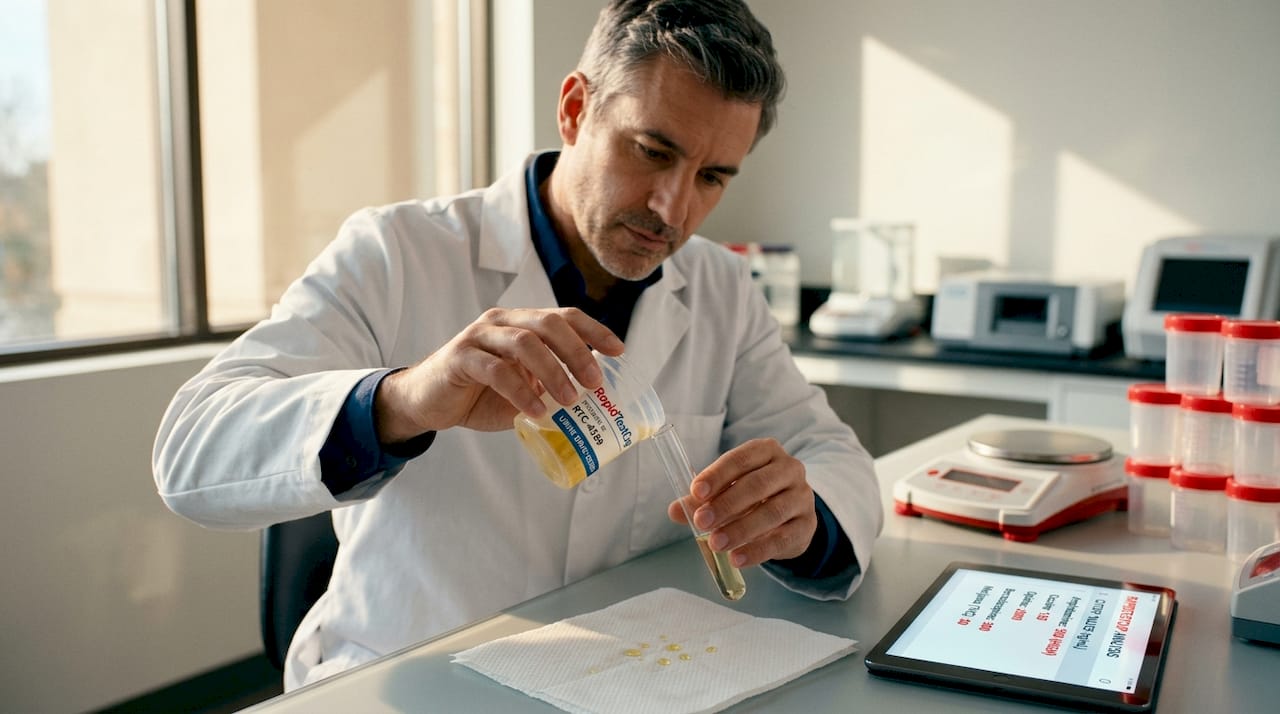
SAMHSA’s Mandatory Guidelines for Federal Workplace Drug Testing set the most widely referenced thresholds. For example, THC-COOH is cut off at 50 ng/mL on initial screening and 15 ng/mL on confirmatory GC/MS. Amphetamines screen at 500 ng/mL. Different regulatory frameworks, including Department of Transportation (DOT) and clinical settings, may use different values. As StatPearls explains, cutoff values balance false positives and false negatives; immunoassays can cross-react and produce false positives that require confirmatory follow-up.
Cross-reactivity is the hidden variable that trips up even experienced professionals. Immunoassay panels do not always react exclusively to the target drug. Common examples include:
- Amphetamine panels reacting to certain antihistamines (like brompheniramine) and cold medications containing pseudoephedrine
- PCP screens cross-reacting with dextromethorphan (found in OTC cough syrups)
- Opioid screens missing some synthetic opioids like fentanyl, which require specific fentanyl panels
- Benzodiazepine screens showing variable sensitivity across different benzo metabolites
| Drug class | Common cutoff (screening) | Key cross-reactivity risk |
|---|---|---|
| THC | 50 ng/mL | Hemp-based CBD products |
| Amphetamines | 500 ng/mL | Pseudoephedrine, certain antihistamines |
| Opiates | 300 ng/mL | Poppy seeds, quinolone antibiotics |
| PCP | 25 ng/mL | Dextromethorphan |
| Benzodiazepines | 200 ng/mL | Variable metabolite detection |
Specimen quality also directly affects interpretation. Dilute specimens, those with creatinine below 20 mg/dL, can push concentrations below detectable cutoffs regardless of actual use. Understanding which factors influence drug test accuracy is not optional if you are responsible for reporting. Similarly, knowing the documented causes of false positives in drug tests protects both the individual being tested and the organization relying on the result.
Pro Tip: When you receive a presumptive positive from a panel known for cross-reactivity, such as the amphetamine screen, document the specific medication history of the donor before sending the specimen for confirmation. It streamlines the MRO review and flags the cross-reactivity risk early.
Leverage the Medical Review Officer process for accurate and compliant interpretation
A laboratory-confirmed positive is not the end of the interpretive process. It is the beginning of the MRO review. The MRO is a licensed physician trained specifically to evaluate drug test results alongside medical and contextual information. Their role exists precisely because a number on a lab report does not capture the full picture.
SAMHSA’s workplace drug testing resources confirm that MROs interpret results with medical history and donor interviews, preventing false positives from being reported and ensuring only legitimate positives move forward.
Here is how the MRO review process works in practice:
- Receive the certified lab result. The MRO receives the original laboratory report, including chain-of-custody documentation and quantitative confirmation results.
- Review medical and prescription history. The MRO evaluates whether a legitimate medical explanation exists, such as a valid prescription for the detected substance.
- Contact the donor. If a potential medical explanation exists, the MRO contacts the donor directly for a private interview to gather supporting documentation.
- Evaluate split specimen testing. If the donor requests a split specimen retest, the MRO manages that process and incorporates its findings before making a final determination.
- Issue the final report. The MRO reports the result as negative, positive, canceled, or test not performed to the employer or requesting entity, with no mention of prescription details to protect donor privacy.
Split specimen testing is an underused safeguard. Federal guidelines require that urine specimens be split into two portions at collection. If the primary specimen tests positive, the donor has the right to request a confirmatory test on the split specimen at a second federally certified lab. Understanding how to manage drug test results in a workplace setting includes knowing when to invoke this safeguard.
Implement quality management and reporting standards in laboratories
Accurate interpretation does not stop at the science. The laboratory itself must operate within a quality framework that ensures every result is traceable, documented, and defensible. ISO 15189 is the international standard for medical laboratory quality and competence. As a post-examination quality management framework, ISO 15189 requires labs to control processes from sample receipt to result communication, including how they handle measurement uncertainty and transmit critical findings.
| ISO 15189 requirement | What it means in practice |
|---|---|
| Post-examination processes | Labs must define procedures for result review before release |
| Measurement uncertainty | Even qualitative tests require documentation of potential variability |
| Traceability | All results must link back to calibrators, controls, and reagent lots |
| Secure communication | Results must be transmitted via controlled, auditable channels |
| Record retention | Retention periods must meet regulatory minimums for the test type |
Measurement uncertainty is a concept often dismissed in qualitative testing, but it applies more than you might think. If a result falls within 20 percent of the cutoff concentration, that specimen sits in a gray zone where analytical variability could determine the outcome. Labs that interpret drug test results with confidence understand that these near-cutoff results demand additional scrutiny, not a quick positive or negative call.
Pro Tip: Build a result release checklist that requires a second technical review for any result within 20 percent of the cutoff. This single procedural step dramatically reduces the number of challenged results that escalate to litigation.
Avoid pitfalls and common errors when interpreting test results
Even experienced professionals fall into recurring interpretation traps. Recognizing them is the first step to avoiding them.
Common mistakes include:
- Treating a screening result as definitive. A positive immunoassay result is a reason to send for confirmation, not a reason to report a positive.
- Ignoring cross-reactivity. Not checking the donor’s OTC or prescription medication use before interpreting an amphetamine or opiate screen is a documented source of wrongful positives.
- Misreading cutoff significance. A result at 51 ng/mL on a 50 ng/mL cutoff is positive by the numbers, but it warrants careful review given analytical variability.
- Stripping clinical context. A positive result reflects detection above a threshold. It says nothing about when the drug was taken, whether the individual was impaired, or whether use was authorized.
- Overlooking panel limitations. Standard opiate screens target morphine and codeine. They often miss oxycodone, hydrocodone, and buprenorphine unless the panel specifically includes them. Benzodiazepine screens vary widely in their sensitivity to individual benzo metabolites.
The growing use of AI tools to summarize or interpret lab results introduces a new category of risk. AI-generated interpretations can produce wrong answers and confuse end users, making them unsuitable as standalone decision-making tools.
AI tools may flag a result as positive or negative and offer a plain-language explanation that sounds authoritative. But they lack the clinical context, regulatory knowledge, and accountability of a trained professional. Use them for decision support only, and never as the basis for a final reporting determination.
Knowing why confirmatory drug testing matters protects your organization and the individuals whose results you are responsible for interpreting.
Why accurate interpretation is a chain, not a single step
Here is the perspective most training materials miss: interpretation is not a moment. It is a chain. Every link matters, and a failure at any point can contaminate all the work that follows.
Think about what actually happens in a positive drug test case. The specimen is collected. Chain of custody is established. The sample reaches the lab. The immunoassay screen runs. A presumptive positive triggers confirmatory GC/MS. The MRO reviews the result against medical history. The final report goes to the employer. That is seven distinct steps, each with its own error risks.
SAMHSA’s federal workplace drug testing guidance makes clear that the interpretive process includes collection integrity, screening cutoffs, confirmatory testing, and MRO verification. Focusing on screening alone misses every error prevention opportunity that follows. Most contested results in litigation do not fail at the science. They fail at chain of custody, documentation, or MRO review, the procedural steps professionals sometimes treat as formalities.
The uncomfortable truth is that a result can be analytically correct and legally indefensible at the same time. If the chain of custody was broken, if the specimen was stored incorrectly, or if the MRO skipped the donor interview, it does not matter what the GC/MS showed.
Our strong recommendation: use a forensic drug testing checklist at every stage of the process. Not because professionals are careless, but because a structured, step-by-step verification system catches the errors that slip through when anyone is moving fast.
Pro Tip: Make communication between collection agents, lab analysts, and MROs a formal part of your protocol, not an exception. When each party treats their role as isolated, errors at handoff points multiply.
Streamline your drug test interpretation with trusted testing products
Accurate interpretation depends on reliable data, and reliable data starts with the quality of the test itself.
At Rapid Test Cup, we supply CLIA waived, FDA-approved drug testing products built for professional and forensic environments. Whether you need broad-spectrum panels or specialized analyte detection, our catalog supports workflows that hold up under MRO review and regulatory scrutiny. Three products worth reviewing for your lab or clinic:
- 12 Panel ADLTX Cup: Covers twelve common drug classes with integrated adulterant detection, designed to support specimen validity testing in a single collection cup.
- 22-Panel Drug Test with Adulterants and Zaza: A wide-spectrum panel including Zaza (tianeptine) detection and six adulterant checks, ideal for programs requiring extended coverage.
- MET Drug Test Strip: A reliable single-analyte strip for methamphetamine screening, suitable for rapid triage in high-volume settings.
Each product aligns with federal screening guidelines and is designed to feed into confirmatory workflows without gaps in documentation or specimen integrity.
Frequently asked questions
What is the difference between presumptive and confirmatory drug tests?
Presumptive tests are initial screenings that detect possible drug presence quickly but are less specific, while confirmatory tests use methods like GC/MS to definitively identify and quantify substances. As StatPearls documents, presumptive results are less definitive and always require confirmatory verification before a positive is reported.
Can a positive drug test result mean drug misuse automatically?
No. A positive laboratory result must be reviewed by a Medical Review Officer who considers medical history and interviews the donor before concluding misuse. SAMHSA confirms that lab-confirmed positives require MRO review before any adverse action is appropriate.
Why are cutoff concentrations important in drug testing?
Cutoff concentrations define the threshold that separates a positive from a negative result, preventing trace environmental exposures from triggering false positives. StatPearls notes that cutoff values must balance sensitivity against specificity to produce accurate, compliant outcomes.
How do laboratories ensure test result compliance and accuracy?
Laboratories follow quality management standards like ISO 15189, which governs workflows, documentation, measurement uncertainty, traceability, and secure reporting. The ISO 15189 post-examination standard requires controlled processes from sample receipt to result communication.
Should AI-generated drug test interpretations be trusted?
AI summaries can support professional decision-making but should never replace expert judgment. NPR reporting on AI interpretation risks confirms these tools can produce wrong answers and confusion, making independent expert verification essential for any final reporting decision.