Blog
Spotting Drug Test Tampering: 5 Signs & Protocols

TL;DR:
- Effective detection relies on vigilant physical, chemical, and procedural indicators during specimen collection.
- Regular staff training and updated protocols are essential to identify sophisticated tampering methods.
- Advanced multi-panel testing devices with built-in adulterant detection improve on-site tampering identification.
When a tampered specimen slips through undetected, the consequences reach far beyond a failed compliance check. Careers end, legal cases collapse, and treatment programs lose the credibility they depend on. In law enforcement and substance abuse treatment settings, the margin for error is essentially zero. Tampering methods include dilution, adulteration, and substitution, and each one is designed to fool standard testing. This guide walks you through the most reliable visual, chemical, and procedural indicators, along with the protocols that protect your organization’s integrity and legal standing.
Table of Contents
- Understanding drug test tampering and why it matters
- Physical signs: What to look for during specimen collection
- Chemical red flags: Key lab-based indicators
- Protocols and best practices for detecting tampering
- Expert tips: Addressing edge cases and evolving threats
- Our perspective: Why constant vigilance and ongoing education are non-negotiable
- Upgrade your drug testing with advanced solutions
- Frequently asked questions
Key Takeaways
| Point | Details |
|---|---|
| Physical red flags | Odd color, strong chemical smell, and out-of-range temperature signal possible tampering. |
| Lab evidence | Low creatinine or extreme pH and specific gravity values should trigger further validation. |
| Follow strict protocols | Always implement observed collection and documentation if tampering is suspected. |
| Stay updated | New adulterants require regular staff training and use of advanced detection kits. |
Understanding drug test tampering and why it matters
Drug test tampering is any deliberate attempt to alter, replace, or contaminate a urine specimen to produce a negative or invalid result. Three core methods drive most cases you will encounter in the field.
Dilution involves drinking excessive water before the test or adding water directly to the sample. Adulteration means introducing a foreign substance, such as bleach, vinegar, hand soap, or a commercial masking agent, into the specimen. Substitution goes further, replacing the donor’s urine entirely with someone else’s clean sample or a synthetic urine product purchased online.
Undetected tampering does real damage. In treatment settings, it allows continued drug use to go unreported, undermining recovery plans and putting clients at risk. In law enforcement contexts, it can compromise prosecutions, create liability exposure, and erode public trust in the testing program itself.
Real-world collection sites face practical challenges every day:
- Donors who pre-hydrate aggressively before arriving
- Concealed adulterant packets or small vials hidden on the body
- Synthetic urine kits sold with heating pads to mimic body temperature
- Staff who are under-trained on what abnormal specimens look like
“Specimen validity testing is not optional in regulated settings. It is the last line of defense between a compliant result and a legal liability.”
Both DOT and non-DOT programs carry significant stakes. Medical Review Officer Guidance outlines how MROs are required to evaluate and report invalid or substituted specimens, and the consequences for donors can include immediate disqualification or disciplinary action. Understanding adulterants in drug tests is the foundation for building a detection system that actually works.
Physical signs: What to look for during specimen collection
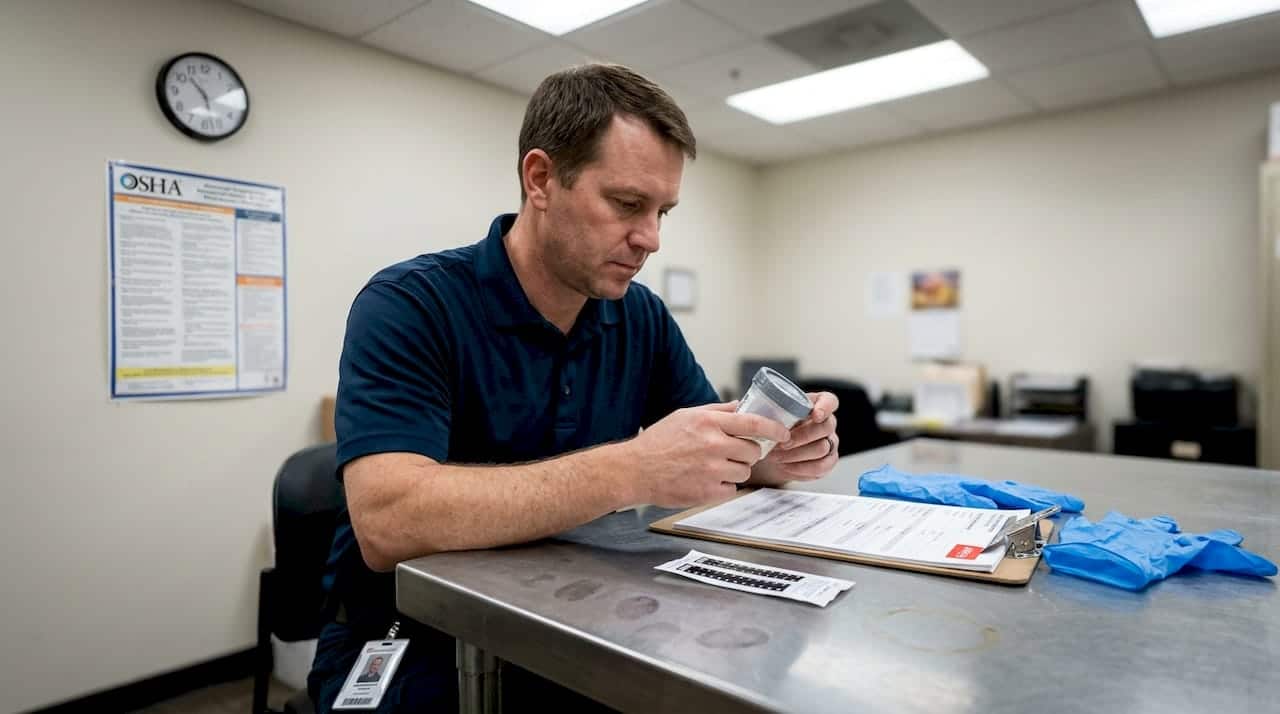
After recognizing why vigilance is key, the first defense is careful observation during collection. Your eyes and nose are your fastest tools.
Color is one of the most immediate giveaways. Normal urine ranges from pale yellow to amber. A sample that is almost completely clear may signal aggressive dilution. A bluish or greenish tint can indicate the presence of toilet bowl cleaner, while an unusually dark or murky appearance warrants a closer look for added substances.

Foam and clarity also matter. Healthy urine may produce a small amount of foam that dissipates quickly. Excessive, persistent foam can suggest the presence of soap or detergent. Visible particulates or a cloudy suspension that does not settle can point to added materials.
Odor is underused as a detection tool. Train your staff to notice chemical smells. Bleach, vinegar, ammonia, and artificial fragrances are all red flags that no legitimate specimen should carry.
Common physical tampering signatures to watch for:
- Specimen temperature outside the 90 to 100°F range within 4 minutes of collection
- Unusually pale or colorless appearance
- Strong chemical or soapy smell
- Excessive foaming that does not dissipate
- Visible floating particles or sediment
Physical signs include abnormal color, clarity, odor, foaming, and temperature outside the 90 to 100°F range, and missing any one of them can let a tampered sample pass unquestioned.
Pro Tip: Always use a calibrated temperature strip on the collection cup. A reading below 90°F within the first 4 minutes is automatic grounds for a second observed collection under most regulated programs.
For additional detection confidence, adulteration test strips can be used at the point of collection to screen for the most common chemical adulterants before the sample even leaves the room.
Chemical red flags: Key lab-based indicators
While physical signs are critical at collection, most tampering methods are ultimately exposed by lab testing. Specimen validity testing checks specific chemical markers that healthy human urine falls within predictably.
| Marker | Normal range | Tampering signal |
|---|---|---|
| Creatinine | 20 to 300 mg/dL | Below 2 mg/dL suggests substitution |
| Specific gravity | 1.003 to 1.030 | Below 1.001 or above 1.030 is flagged |
| pH | 4.5 to 8.5 | Below 3 or above 11 indicates adulteration |
| Nitrites | Less than 200 mcg/mL | Above 500 mcg/mL signals adulteration |
| Oxidants/chromium | Not detected | Any presence is a confirmed adulterant |
| Glutaraldehyde | Not detected | Presence indicates commercial adulterant use |
| Surfactants | Not detected | Presence suggests soap or detergent added |
Chemical abnormalities in creatinine, specific gravity, and pH can indicate tampering, and DOT regulations define exact cutoff thresholds for each marker.
Low creatinine combined with low specific gravity is the classic dilution or substitution profile. A specimen with creatinine below 2 mg/dL and specific gravity below 1.001 is reported as substituted, not just dilute, because those values are physiologically impossible in real human urine.
Pro Tip: Do not dismiss borderline results without context. A creatinine of 18 mg/dL is technically “dilute” but may reflect legitimate hydration. Always cross-reference with specific gravity and request MRO review before drawing conclusions.
Edge cases do exist. Some medications, particularly antibiotics, can elevate nitrite levels. Certain diets affect pH. Urine adulteration detection research confirms that context matters, which is exactly why confirmation testing and MRO review are built into regulated programs. For a deeper breakdown of what the numbers mean in practice, the guide on interpreting urine drug test results is a useful operational reference.
Protocols and best practices for detecting tampering
Once chemical warnings arise, staff must follow specific protocols to ensure both accuracy and legal security. Improvising at this stage creates gaps that can invalidate results or expose your organization to liability.
Here is what to do when tampering is suspected:
- Recheck temperature immediately. If the strip reading is outside range, document the exact reading and time.
- Notify the collection site supervisor. Do not proceed without authorization from a designated authority.
- Switch to observed collection. Under DOT rules, a same-day observed collection is required when substitution or adulteration is suspected.
- Initiate Specimen Validity Testing (SVT). Request the lab run a full validity panel alongside the drug screen.
- Document everything. Complete the chain of custody form in full, noting all observations, times, and actions taken.
- Refer to the MRO. The Medical Review Officer makes the final call on invalid, substituted, or adulterated results.
| Scenario | Standard collection | Observed collection |
|---|---|---|
| Routine screen | Yes | No |
| Suspected dilution | Yes, with SVT | Discretionary |
| Suspected substitution | No | Required |
| Confirmed adulteration | No | Required |
| Donor refusal | Document and report | Treated as refusal to test |
Observed collection, SVT, and chain of custody are mandatory upon suspected tampering in DOT testing, and failure to follow these steps can render results legally unusable.
Refusing to provide a specimen under observed collection conditions is treated as a refusal to test under DOT rules, which carries the same consequences as a positive result. For a full operational overview, the resource on managing drug test results and DOT drug testing compliance cover both the regulatory framework and day-to-day execution. The SAMHSA workplace FAQ also provides authoritative guidance on federal workplace testing standards.
Expert tips: Addressing edge cases and evolving threats
Protocols handle most situations, but complex or subtle tampering is a growing challenge. The market for adulterants and synthetic urine products evolves faster than many testing programs update their procedures.
Synthetic urine has become increasingly sophisticated. Some products now include uric acid, creatinine, and balanced pH to pass basic validity checks. Heating pads and temperature-controlled pouches help them pass the temperature screen. Labs are responding with biomarker panels that look for compounds only produced by the human body.
Key emerging threats and how labs address them:
- Zinc sulfate (found in dietary supplements) can suppress immunoassay results. Spot tests for zinc are now recommended when results seem inconsistent with clinical presentation.
- Papain and other enzyme-based adulterants can degrade drug metabolites in the sample. Multi-layer screening catches these by testing specimen integrity alongside drug presence.
- Dilution masking with creatine loading before the test can push creatinine levels back into normal range. Isotope ratio testing is the most reliable counter, though it is not yet standard in all settings.
“When a result does not match the clinical picture, that discrepancy itself is data. MROs are trained to treat inconsistency as a signal, not just an anomaly.”
Emerging adulterants require updated approaches, and advanced labs now use spot tests and multi-layer screening to stay ahead of new products. Staying current with drug testing innovations is not optional for programs that want detection rates to keep pace with evasion tactics.
Our perspective: Why constant vigilance and ongoing education are non-negotiable
Here is something that rarely gets said plainly: most tampering that slips through is not a technology failure. It is a training failure. The tools exist. The protocols are written. What breaks down is the human layer, the collector who skips the temperature check because the line is long, the supervisor who does not follow up on a borderline result, the program that has not updated its training since 2019.
New adulterant products appear on the consumer market every few months. Staff who were well-trained two years ago may not recognize today’s threats. Ongoing professional development is not a nice-to-have; it is the difference between a program that catches tampering and one that unknowingly certifies it.
Culture matters as much as policy. When staff treat specimen validity testing as a formality rather than a critical step, that attitude becomes the weakest link. Organizations that invest in regular case reviews, updated training, and open communication about new threats consistently outperform those that rely on static procedures.
We encourage every program to schedule annual policy reviews, engage with future-oriented trends in drug testing, and treat every edge case as a learning opportunity rather than an inconvenience.
Upgrade your drug testing with advanced solutions
Detecting tampering starts with having the right tools at the point of collection. Multi-panel cups with built-in adulterant detection remove the guesswork by screening for the most common validity markers alongside the drug panel itself.
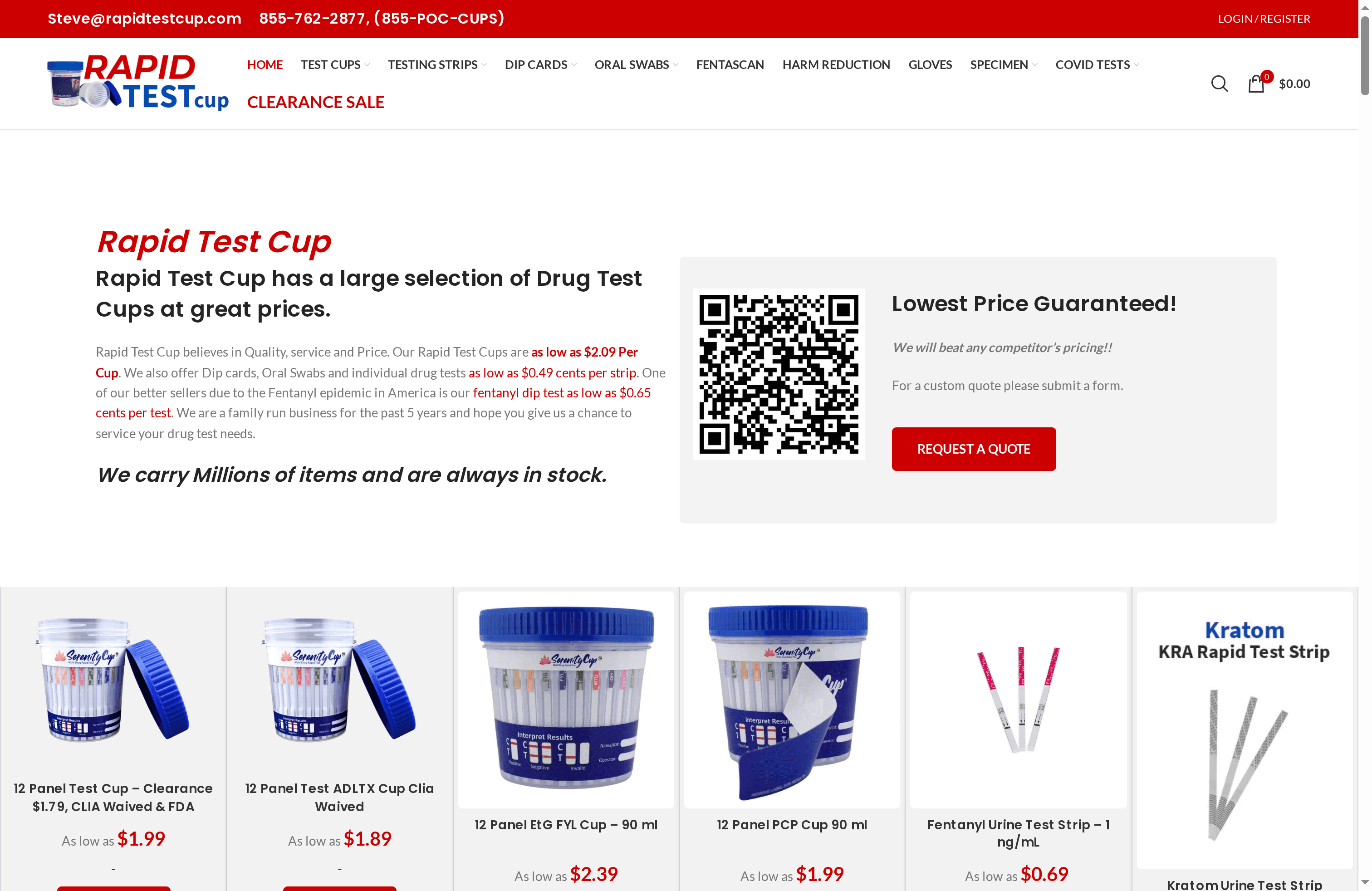
At rapidtestcup.com, we carry FDA-approved, CLIA waived cups designed specifically for professional compliance programs. The 18 panel cup with adulterants and 22-panel test with adulterants give your collectors immediate validity data without sending every sample to a lab. For programs with tighter budgets, the 15 panel cup with adulterants delivers reliable screening at a lower cost per test. Upgrading your collection kit is the most direct way to close the gap between what your protocols require and what your tools can actually detect.
Frequently asked questions
How can I quickly verify a urine sample is valid?
Check color, smell, clarity, and temperature within 4 minutes of collection. A reading between 90 and 100°F, normal yellow color, and no chemical odor are your fastest baseline indicators.
What lab values most often signal drug test tampering?
Low creatinine and abnormal specific gravity, extreme pH outside the 3 to 11 range, and the presence of oxidants or nitrites above threshold levels are the most consistent chemical flags for tampering.
What should I do if I suspect someone tampered with a drug test?
Switch to observed collection procedures immediately, document all observations with timestamps, and request a full specimen validity test before the sample leaves the collection site.
Can common medications create false positives for tampering signs?
Some medications affect nitrite or pH levels, which can mimic adulteration markers. Always route borderline or unusual results through a Medical Review Officer before making a final determination.
Are advanced drug test cups better at detecting tampering today?
Yes. Multi-panel cups with adulterant detectors now flag oxidants, nitrites, pH extremes, and specific gravity anomalies at the point of collection, catching most tampering attempts that basic kits would miss entirely.