

Blog
Drug testing in law enforcement: safety and compliance 2026


Enhanced drug testing protocols have contributed to a 12% reduction in officer-involved incidents over the past three years, demonstrating the critical role testing plays in maintaining law enforcement integrity. As synthetic opioids and designer drugs proliferate, agencies need advanced detection methods to protect officers and communities. This article examines drug testing technologies, legal frameworks, operational benefits, and implementation strategies that enhance safety and compliance in 2026.
Table of Contents
- Introduction To Drug Testing In Law Enforcement
- Technologies And Methods Used In Drug Testing
- Legal And Regulatory Drug Testing Requirements For Officers
- Operational Benefits And Limitations Of Drug Testing
- Drug Testing’s Impact On Public Safety And Crime Prevention
- Common Misconceptions About Drug Testing In Law Enforcement
- Practical Implementation Guidelines For Law Enforcement Drug Testing Programs
- Enhance Your Law Enforcement Drug Testing With RapidTestCup
Key takeaways
| Point | Details |
|---|---|
| Accountability and safety | Drug testing programs improve officer accountability while reducing impaired incidents and building public trust. |
| Advanced detection | Chromatography, mass spectrometry, and oral fluid tests provide rapid, accurate identification of traditional and emerging substances. |
| Legal compliance | Federal mandates and validated protocols ensure testing results meet evidentiary standards and withstand legal scrutiny. |
| Crime prevention impact | Testing supports overdose reduction, synthetic drug interdiction, and impaired driving enforcement efforts. |
| Effective implementation | Successful programs combine validated technologies, trained personnel, clear policies, and regular protocol reviews. |
Introduction to drug testing in law enforcement
Drug testing in law enforcement has evolved from basic screening in the 1980s to sophisticated forensic analysis addressing today’s complex drug landscape. The historical evolution of drug testing reveals how agencies adapted protocols to detect emerging threats, from crack cocaine to fentanyl analogs.
Maintaining officer integrity and public safety requires comprehensive testing strategies. When officers operate under the influence, response times slow, judgment becomes impaired, and communities lose trust in law enforcement institutions. Drug testing serves as both a deterrent and accountability mechanism.
Current drug challenges demand updated testing approaches:
- Synthetic opioids like fentanyl and carfentanil appear in street drugs at lethal concentrations
- Designer stimulants and psychedelics evade traditional testing panels
- Polysubstance use complicates detection and interpretation
- Adulterants mask drug presence or invalidate test results
Agencies must balance rapid field testing with laboratory confirmation to address these evolving threats. The DEA National Drug Threat Assessment provides crucial intelligence on emerging substances requiring updated detection capabilities.
Pro Tip: Review your agency’s testing panel quarterly against regional drug threat data to ensure coverage of locally prevalent substances.
Technologies and methods used in drug testing
Modern forensic drug testing combines multiple technologies to achieve accurate, timely results. Chromatography and mass spectrometry detect traditional and emerging substances with exceptional accuracy, serving as the gold standard for confirmatory testing. These laboratory methods separate drug compounds and identify molecular structures, providing legally defensible evidence.
Rapid on-site immunoassay test kits offer immediate presumptive results at a fraction of laboratory costs. These kits use antibodies that bind to specific drug classes, producing visible results in minutes. Understanding the tradeoff between speed and sensitivity helps agencies deploy the right tool for each situation.
Advanced roadside oral fluid drug screening provides non-invasive detection during traffic stops and field investigations. Oral fluid testing captures recent drug use, typically within 24 to 48 hours, making it ideal for impaired driving enforcement.
| Testing Method | Detection Window | Accuracy | Typical Use Case | Results Timeline |
|---|---|---|---|---|
| Urine immunoassay | 2 to 30 days | Moderate | Pre-employment, random | 5 to 10 minutes |
| Oral fluid screening | 24 to 48 hours | Moderate to high | Roadside, reasonable suspicion | 5 to 15 minutes |
| Lab confirmation (GC/MS) | Varies by substance | Very high | Legal proceedings, disputes | 1 to 5 days |
| Hair follicle analysis | 90 days | High | Long-term use detection | 3 to 7 days |
Balancing test speed and accuracy depends on operational context. Field screening supports immediate decisions about officer fitness or suspect impairment, while laboratory confirmation provides court-admissible evidence. Agencies implementing 2025 drug testing trends report improved detection rates for synthetic cannabinoids and designer stimulants.
Understanding drug test cup technology helps agencies select products matching their operational requirements. Features like integrated adulterant testing and temperature strips enhance result reliability. Emerging applications of AI and oral fluid testing promise faster analysis and pattern recognition capabilities.
The Substance Abuse and Mental Health Services Administration provides guidelines for drug testing in safety-sensitive workplaces, applicable to law enforcement contexts.
Pro Tip: Establish a two-tier system using rapid screening for initial detection and laboratory confirmation for all positive results requiring disciplinary or legal action.
Legal and regulatory drug testing requirements for officers
Federal, state, and agency-specific mandates create a complex legal framework governing law enforcement drug testing. Federal mandates require various testing points, including post-use of deadly force, to maintain accountability and public trust. Implementation deadlines vary by jurisdiction, with many states adopting stricter requirements in 2025 and 2026.
Common testing points include:
- Pre-employment screening before academy admission or hiring
- Reasonable suspicion testing based on observable behavior or performance concerns
- Random testing of officers in safety-sensitive positions
- Post-incident testing following use of force, accidents, or policy violations
- Return-to-duty and follow-up testing after substance abuse treatment
Legal admissibility depends on standardized scientifically validated protocols and chain of custody integrity. Courts scrutinize testing procedures to ensure results meet evidentiary standards. Agencies must document every step from collection through analysis to maintain defensibility.
State regulations create significant variability in protocols. Some states mandate testing after any discharge of a firearm, while others require testing only for fatalities. Understanding these differences prevents compliance gaps and legal challenges.
Key compliance steps for agencies:
- Develop written policies clearly defining testing circumstances and procedures
- Use only certified laboratories and validated testing methods
- Train collection personnel in proper techniques and documentation
- Establish secure chain of custody protocols with tamper-evident seals
- Implement medical review officer processes to interpret positive results
- Maintain confidential records according to regulatory retention requirements
Agencies should consult legal considerations in drug testing to avoid constitutional challenges and privacy violations. The forensic drug testing checklist provides a systematic approach to maintaining compliance.
Proper documentation of drug testing procedures creates an audit trail supporting legal defensibility. Training staff for drug testing ensures consistent application of protocols across all testing scenarios.
Review law enforcement drug testing mandates annually as legislative requirements evolve.
Operational benefits and limitations of drug testing
Drug testing programs deliver measurable operational improvements when implemented comprehensively. Enhanced accountability stems from officers knowing testing occurs randomly and after critical incidents. Agencies report fewer impaired incidents and improved decision-making quality among tested personnel.
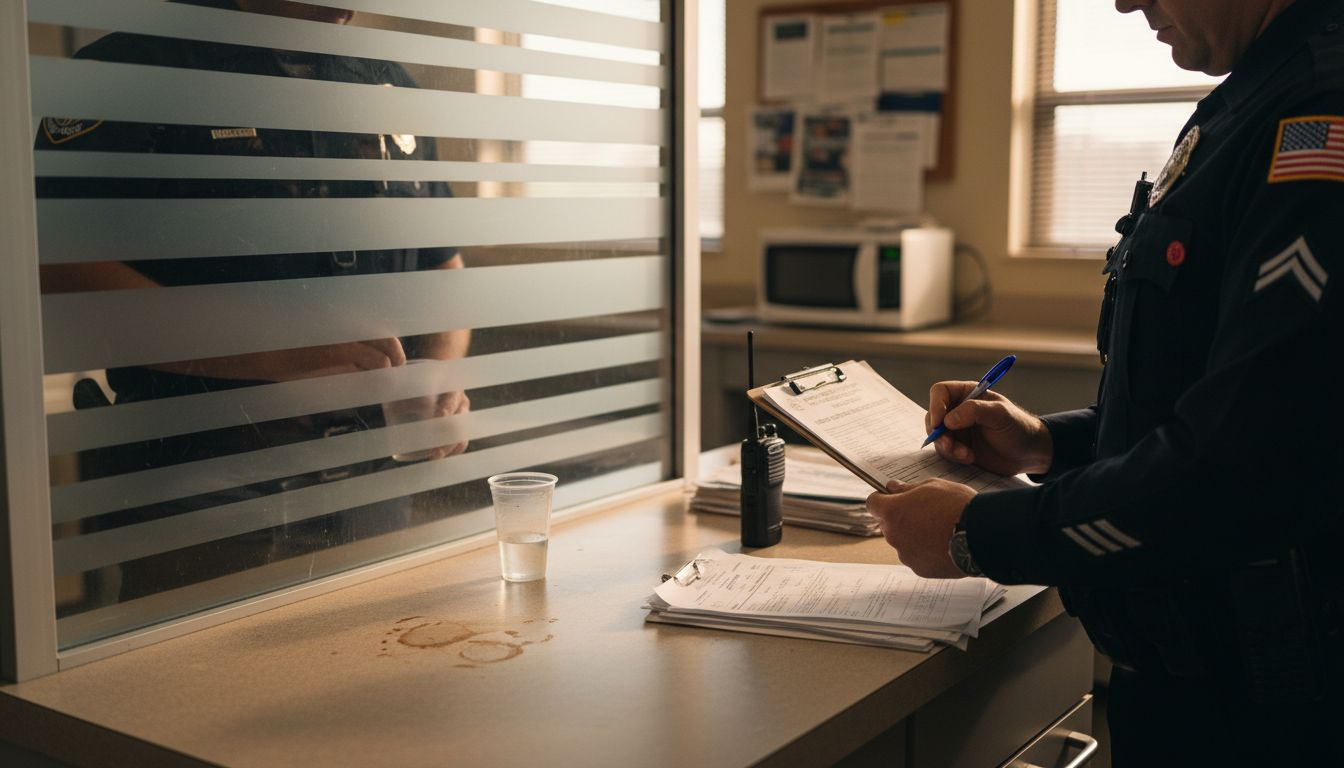
Public trust increases when communities see transparent accountability measures. Drug testing after use of deadly force demonstrates commitment to professional standards and impartial investigation.
However, limitations require honest assessment. False positives occur when legitimate medications or dietary supplements trigger immunoassay reactions. Detection windows vary by substance and individual metabolism, potentially missing recent use or flagging distant consumption. Resource demands include testing costs, personnel time, and specialized training requirements.
Operational challenges to anticipate:
- Balancing officer privacy rights with public safety imperatives
- Managing the time lag between screening and confirmatory results
- Addressing morale concerns when testing is perceived as punitive rather than protective
- Securing budget allocation for quality testing programs and equipment
- Maintaining testing program integrity against potential tampering or circumvention
Policy implications extend beyond testing mechanics. Effective programs integrate testing with employee assistance, clear consequences for violations, and supportive pathways for officers seeking help. Punitive-only approaches drive substance abuse underground rather than addressing root causes.
Agencies conducting workplace drug testing report best results when combining education, prevention, and intervention strategies.
Pro Tip: Combine rapid screening with laboratory confirmation for all positive results to minimize false positives while maintaining operational speed for time-sensitive decisions.
Drug testing’s impact on public safety and crime prevention
Drug testing supports broader public safety goals beyond officer accountability. Testing correlates with reductions in overdose deaths and identification of synthetic opioids, aiding interdiction efforts. When agencies detect emerging substances through testing programs, intelligence flows to tactical units targeting supply networks.
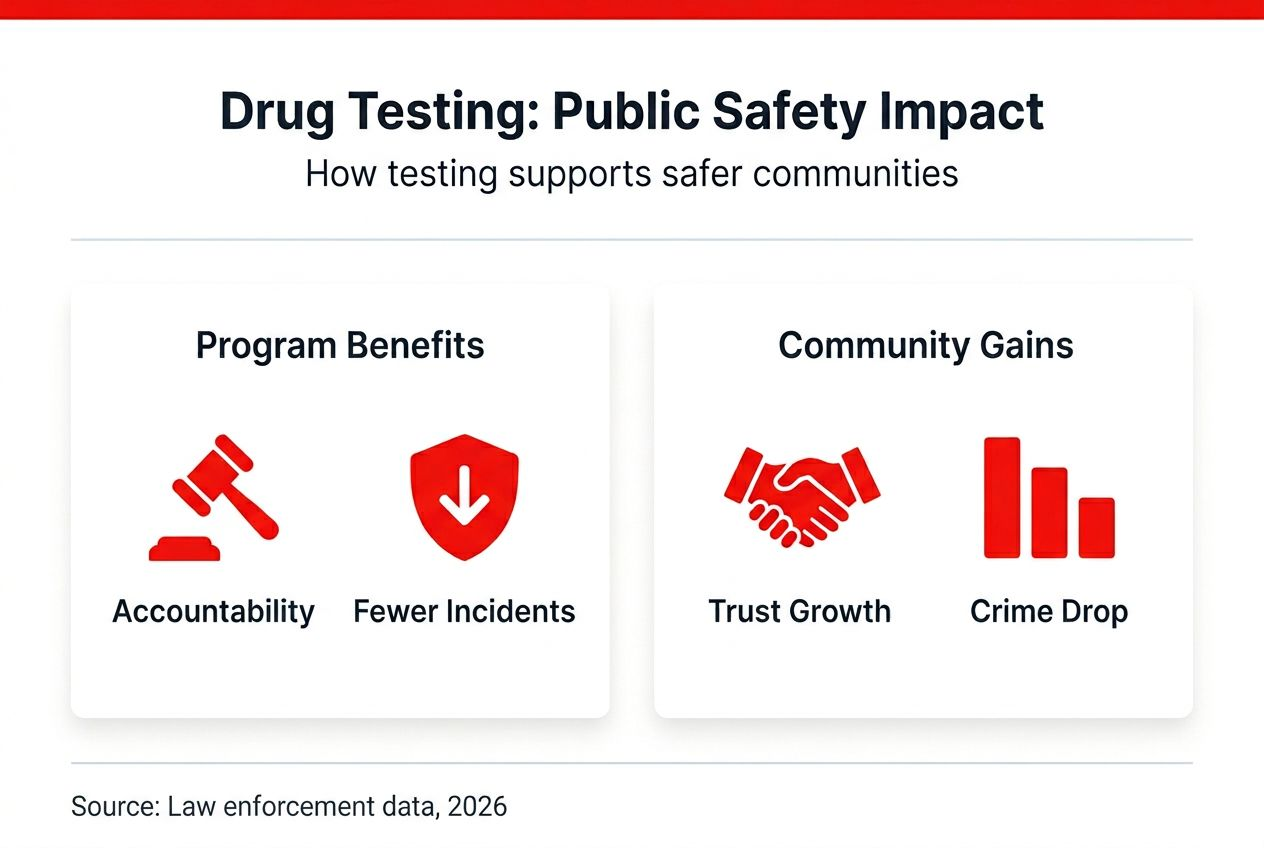
Identifying synthetic opioids and adulterants during enforcement operations provides critical threat assessments. Field testing that reveals fentanyl presence in heroin or cocaine alerts officers to heightened overdose risk and necessitates appropriate medical response protocols.
Impaired driving enforcement relies heavily on oral fluid and blood testing to establish legal impairment. Standardized testing supports DUI prosecutions and removes impaired drivers from roadways before crashes occur.
Community trust and legitimacy grow when law enforcement demonstrates commitment to the same standards expected of the public. Transparent drug testing policies signal accountability and professionalism.
| Year | Overdose Deaths (per 100k) | Drug Testing Programs Implemented | Synthetic Opioid Seizures |
|---|---|---|---|
| 2023 | 32.4 | Baseline (40% of agencies) | 8,200 incidents |
| 2024 | 30.1 | Expanded (62% of agencies) | 11,500 incidents |
| 2025 | 28.3 | Comprehensive (78% of agencies) | 14,800 incidents |
| 2026 | 26.7 (projected) | Universal (estimated 85%) | 16,200 (projected) |
Pretrial drug testing improves compliance and reduces recidivism when integrated with case management, demonstrating testing’s broader criminal justice applications.
Crime interdiction benefits from intelligence gathered during testing. Pattern analysis reveals geographic hotspots for specific substances, informing deployment strategies and partnership with public health agencies.
Effective workplace drug testing principles apply across law enforcement contexts, from officer accountability to suspect monitoring.
Consult the DEA drug threat assessment for current intelligence on emerging substances requiring updated testing protocols.
Common misconceptions about drug testing in law enforcement
Several myths undermine drug testing acceptance and effectiveness. Clarifying these misunderstandings strengthens program support and outcomes.
Myth: Drug testing alone deters substance abuse. Reality: Testing alone does not prevent substance abuse; combining testing with supportive programs, employee assistance, and clear policies improves outcomes. Deterrence requires comprehensive approaches addressing underlying causes.
Myth: Test results are always admissible in court. Reality: Admissibility depends on validated protocols, proper chain of custody, and compliance with legal standards. Procedural errors can render scientifically accurate results inadmissible.
Myth: Uniform drug testing protocols exist across all agencies. Reality: Wide variability exists based on state laws, agency policies, and operational contexts. What applies in one jurisdiction may not satisfy requirements elsewhere.
Top misconceptions and corrections:
- All positive tests indicate current impairment – Detection windows vary; marijuana can appear weeks after use when impairment has long passed
- Observed collection is always required – Privacy protections limit direct observation to specific circumstances with proper justification
- Officers can refuse testing without consequence – Refusal typically constitutes policy violation subject to disciplinary action
- Drug testing violates constitutional rights – Courts have upheld reasonable testing policies for safety-sensitive positions
- Expensive programs guarantee better results – Program quality depends on protocol design and implementation, not just budget size
Understanding drug testing misconceptions helps agencies design evidence-based programs resistant to legal challenges and officer resistance.
Addressing myths through education improves voluntary compliance and reduces adversarial program dynamics.
Practical implementation guidelines for law enforcement drug testing programs
Developing effective drug testing programs requires systematic planning aligned with legal requirements and operational realities. Follow these critical implementation steps:
-
Conduct policy development workshops involving legal counsel, union representatives, and command staff to draft comprehensive written policies addressing all testing scenarios, consequences, and appeal procedures.
-
Select validated technologies matching your operational needs and budget constraints, prioritizing CLIA-waived, FDA-approved products for screening and certified laboratories for confirmation.
-
Train designated personnel in proper sample collection techniques, chain of custody documentation, and result interpretation, ensuring competency through periodic recertification.
-
Establish testing triggers including post-incident protocols (within 2 hours of use of force incidents), random selection processes using third-party administrators, and reasonable suspicion criteria with supervisor documentation requirements.
-
Implement secure data management systems maintaining confidentiality while enabling compliance reporting, trend analysis, and audit readiness.
Agencies should reference the forensic drug testing checklist to ensure all procedural elements meet professional standards. Comprehensive training for staff prevents implementation failures from human error.
Regularly reviewing policies keeps programs current with evolving laws and technologies. Annual audits identify gaps before they become compliance violations or legal liabilities.
Pro Tip: Regularly review policies to adapt to evolving laws and technologies, scheduling annual assessments with legal counsel and toxicology consultants to maintain cutting-edge programs.
Enhance your law enforcement drug testing with RapidTestCup
Implementing reliable, compliant drug testing programs requires quality products designed for forensic applications. RapidTestCup offers expert-reviewed urine drug test kits ideal for law enforcement needs, combining accuracy with operational efficiency.
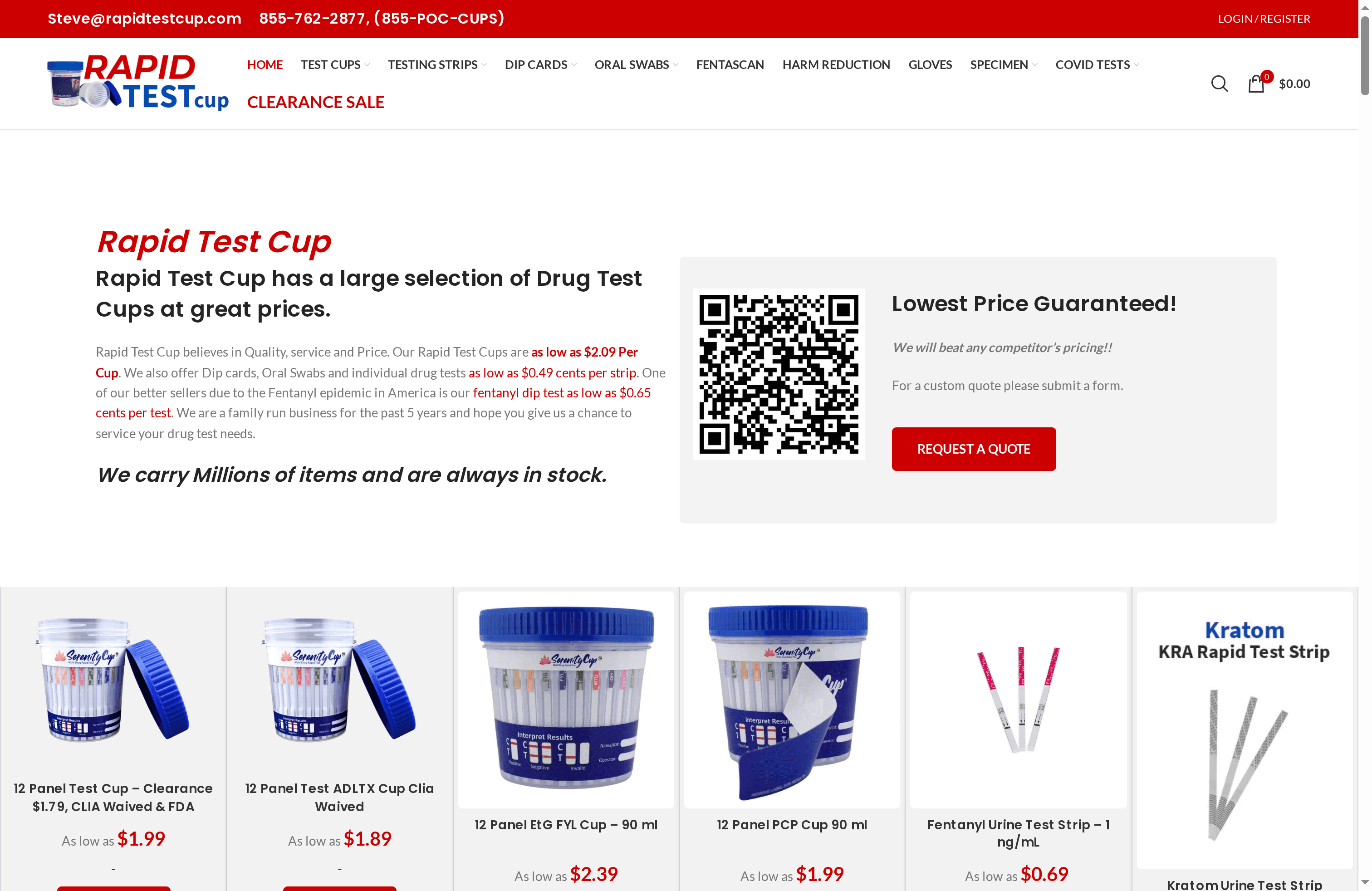
Our comprehensive comparison of top urine drug test kits helps agencies select products matching their specific panel requirements and budget parameters. The detailed guide to selecting drug test kits walks you through critical decision factors including sensitivity thresholds, adulterant detection, and result interpretation.
For agencies requiring extensive coverage, our 18 panel drug test cup with adulterants detects emerging threats like synthetic cannabinoids, tramadol, and fentanyl while screening for common adulterants. All products meet FDA approval standards and include clear instructions for proper collection and interpretation.
FAQ
What substances are most commonly detected in law enforcement drug testing?
Commonly detected substances include opioids (prescription painkillers and heroin), cocaine, marijuana, amphetamines, methamphetamine, synthetic cannabinoids, and designer psychedelics. Testing panels adapt regularly to address emerging regional threats identified through drug intelligence assessments. Agencies typically use 10- to 18-panel tests covering traditional drugs plus synthetic compounds.
How soon after an incident must drug testing be performed on officers?
Testing is often mandated immediately or within 2 hours after incidents involving use of deadly force, officer-involved shootings, or serious accidents to ensure timely accountability and accurate detection. Rapid immunoassay screening followed by laboratory confirmation supports both operational decisions and legal proceedings. Delays beyond this window may allow substances to metabolize below detection thresholds.
What are key challenges in maintaining legal admissibility of drug test results?
Challenges include ensuring scientifically validated procedures are followed precisely, maintaining strict chain of custody documentation from collection through analysis, and demonstrating compliance with federal and state regulations. Any procedural gap can lead to evidence dismissal during legal proceedings. Using certified laboratories, trained collection personnel, and standardized protocols minimizes admissibility risks while supporting successful prosecutions.
Can drug testing alone prevent substance abuse among law enforcement officers?
Drug testing is most effective when combined with employee assistance programs, clear policies outlining consequences and support pathways, wellness initiatives, and random testing schedules that maintain deterrent effects. Testing alone does not prevent substance abuse; comprehensive programs addressing mental health, stress management, and addiction treatment produce better outcomes. Officers need both accountability and access to confidential help.