

Blog
Efficient drug test quality control workflow for 2026 labs


Managing drug test quality control workflows presents ongoing challenges for laboratories. Ensuring accurate results while maintaining compliance with evolving regulations requires systematic approaches and careful attention to detail. Quality assurance managers face pressure to balance speed, accuracy, and regulatory requirements in their testing operations. This guide delivers practical, step-by-step instructions and proven drug testing best practices to help you build and maintain robust quality control workflows that meet 2026 standards.
Table of Contents
- Understanding Drug Testing Methods And Their QC Implications
- Building An Effective Drug Test Quality Control Workflow: Prerequisites And Tools
- Step-By-Step Execution Of Drug Test Quality Control Workflow
- Verifying Results And Continuous Quality Improvement In Drug Testing Workflows
- Explore Our Top-Quality Drug Test Products For Reliable Workflows
- Frequently Asked Questions
Key takeaways
| Point | Details |
|---|---|
| QC ensures reliability | Quality control validates accuracy and maintains compliance with regulatory standards. |
| Method selection matters | Immunoassays offer speed while mass spectrometry provides specificity for confirmatory testing. |
| Workflow components | Effective QC requires proper controls, documentation, trained personnel, and systematic verification. |
| Continuous improvement | Regular proficiency testing and troubleshooting prevent common deficiencies and sustain quality. |
Understanding drug testing methods and their QC implications
Your choice of testing method fundamentally shapes your quality control requirements and workflow design. The two primary technologies used in laboratory drug testing each bring distinct advantages and challenges that directly impact how you structure your QC processes.
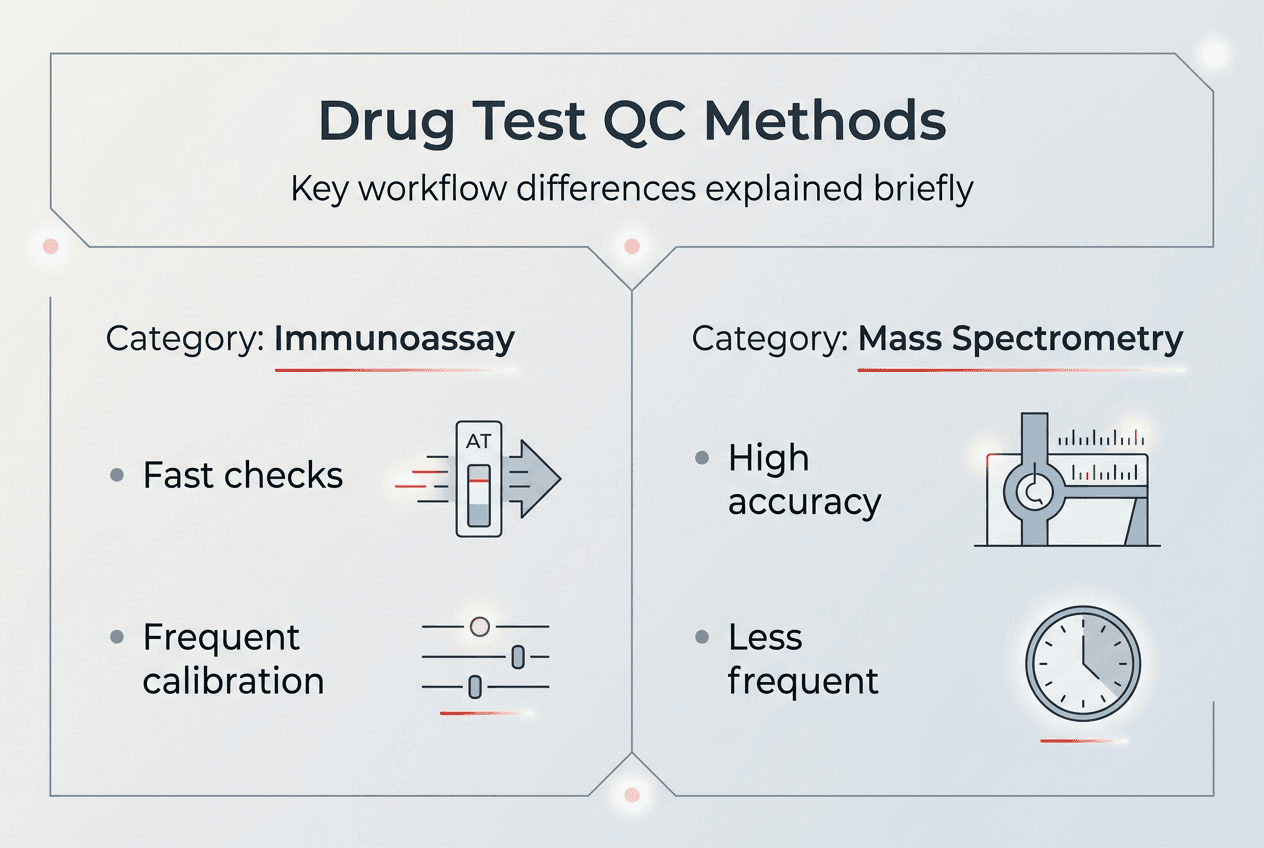
Immunoassays offer speed and minimal sample preparation for high-throughput or point-of-care use in drug testing. These tests work by detecting antibody-antigen reactions that indicate the presence of drug classes. They excel in screening applications where rapid turnaround matters most. You can process large sample volumes with minimal technical expertise, making immunoassays ideal for initial screening in busy laboratories.
However, immunoassays may lack analytical specificity and are prone to cross-reactivity leading to false positives. Structurally similar compounds can trigger antibody responses, creating interpretation challenges. This limitation means you must plan for confirmatory testing when positive results have significant consequences.
Mass spectrometry provides lower sensitivity and increased specificity to detect a broad range of analytes in drug testing. This technology separates compounds by mass and charge, allowing precise identification of specific drugs and metabolites. You gain definitive answers with minimal cross-reactivity concerns.
The tradeoff comes in complexity and cost. Mass spectrometry requires:
- Significant capital investment in instrumentation
- Dedicated laboratory space with proper ventilation
- Highly trained technical staff
- More extensive sample preparation protocols
- Regular calibration and maintenance schedules
Your method selection should align with your laboratory’s specific needs. Consider sample volume, required turnaround time, available budget, and staff expertise. Many labs use a tiered approach: immunoassay screening followed by mass spectrometry confirmation for non-negative results.
Pro Tip: Document your method selection rationale and validation data thoroughly. Regulatory inspectors want to see that you chose appropriate methods based on clinical need and verified their performance in your specific laboratory environment.
“The key to successful drug testing workflows lies in matching your analytical method to your intended use while building QC processes that address each method’s specific vulnerabilities.”
Quality control requirements differ significantly between these methods. Immunoassays need frequent calibration checks and careful monitoring for lot-to-lot reagent variability. Mass spectrometry demands rigorous instrument performance verification, isotope-labeled internal standards, and matrix-matched calibrators. Understanding these distinctions helps you allocate resources effectively and prevent common pitfalls.
Building an effective drug test quality control workflow: prerequisites and tools
Before implementing your QC workflow, you need the right foundation. Gathering proper materials and understanding regulatory requirements sets you up for sustainable compliance and accuracy.
Your essential QC toolkit includes several categories of materials. Quality control samples with known concentrations of target analytes form the backbone of your verification process. You need both positive and negative controls at clinically relevant cutoff levels. Calibrators establish your measurement range and verify instrument response. Proficiency testing samples from external providers give you independent performance assessments.
Documentation systems capture every aspect of your QC activities. You must track control results, instrument maintenance, personnel training, and corrective actions. Modern laboratory information systems automate much of this record keeping, but you still need clear standard operating procedures and review protocols.

Robust QC procedures validate accuracy and reliability of test results. Without systematic verification, you cannot confidently report patient results or defend your findings under scrutiny.
Regulatory frameworks govern every aspect of laboratory drug testing. CLIA regulations establish baseline requirements for quality systems. CAP and other accrediting bodies add specific standards for drug testing workflows. Adhering to QC best practices is essential for maintaining licensure and accreditation.
Recent regulatory updates impact how you structure your workflows. CMS updates to Appendix C provide guidance for new and revised laboratory regulations. These changes clarify expectations around personnel competency, quality control frequency, and proficiency testing requirements. Review these updates carefully to ensure your 2026 workflows meet current standards.
| QC Tool | Primary Purpose | Frequency of Use |
|---|---|---|
| Positive controls | Verify detection at cutoff levels | Each run or daily minimum |
| Negative controls | Confirm absence of false positives | Each run or daily minimum |
| Calibrators | Establish measurement range | Per manufacturer protocol or weekly |
| Proficiency samples | External performance verification | Quarterly or per accreditor requirement |
| Instrument blanks | Check for carryover contamination | Between samples as needed |
Personnel competency forms another critical prerequisite. Your staff must understand the principles behind each test method, recognize when results fall outside acceptable ranges, and know how to respond to QC failures. Initial competency assessments verify baseline knowledge. Ongoing assessments catch skill degradation and ensure consistent performance across all shifts.
Training programs should cover:
- Test principles and methodology
- Quality control interpretation
- Troubleshooting common issues
- Documentation requirements
- Safety and specimen handling protocols
Pro Tip: Create competency checklists that map directly to your standard operating procedures. This approach ensures assessments cover actual job tasks rather than theoretical knowledge that may not translate to daily practice.
Establishing these prerequisites takes time and resources upfront, but the investment pays dividends in smoother operations and fewer compliance issues. You build a foundation that supports accurate testing and makes documenting drug testing procedures straightforward and systematic.
Step-by-step execution of drug test quality control workflow
Executing your QC workflow systematically ensures consistent, reliable results. Follow these sequential steps to maintain accuracy and compliance throughout your testing process.
-
Receive and log specimens properly. Verify patient identification, collection time, and chain of custody documentation. Check specimen integrity for adequate volume, proper temperature, and absence of visible contamination. Record receipt time and assign unique identifiers in your laboratory information system.
-
Prepare quality control materials alongside patient samples. Thaw or reconstitute controls according to manufacturer instructions. Allow materials to reach room temperature before testing. Run controls in the same manner as patient specimens to ensure they experience identical analytical conditions.
-
Execute the analytical procedure. Follow your validated standard operating procedure exactly. Process controls before patient samples when possible to catch system failures early. Maintain consistent timing, temperature, and reagent handling across all samples in the batch.
-
Review control results before releasing patient data. Verify that all QC values fall within acceptable ranges. If controls fail, stop the run and investigate before proceeding. Never release patient results when QC indicates system problems.
-
Document all findings and actions. Record control values, instrument readings, and any deviations from standard protocol. Note corrective actions taken for out-of-range results. Sign and date all documentation contemporaneously with the work performed.
-
Verify result interpretation against established cutoffs. Compare patient results to validated decision points. Apply appropriate flags for presumptive positive findings that require confirmation. Ensure results align with clinical context and previous testing history when available.
Common errors undermine even well-designed workflows. Improper control storage degrades materials and creates false failures. Inconsistent pipetting technique introduces variability that masks real problems. Rushing through procedures to meet turnaround time goals sacrifices accuracy. Failure to perform appropriate testing may delay diagnosis or compromise safety, while misinterpretation can cause stigma and errors.
| QC Method | Key Benefit | Best Application |
|---|---|---|
| Daily controls | Detect day-to-day variation | Routine monitoring of stable methods |
| Multi-level controls | Verify linearity across range | Methods with broad concentration ranges |
| Blind controls | Assess staff competency | Periodic performance checks |
| Split samples | Compare methods or labs | Method validation and troubleshooting |
Documentation and reporting require careful attention to detail. Your records must support every result you release. Best practices include:
- Maintaining complete audit trails in your information system
- Storing raw data and worksheets for the required retention period
- Creating clear, standardized report formats that minimize interpretation errors
- Implementing review processes before result release
- Archiving proficiency testing materials and responses
Ensuring successful participation in proficiency testing programs is critical for compliance and accuracy. Treat proficiency samples exactly like patient specimens. Avoid conferring with other laboratories or using reference materials during testing. Document your results and submit them by the deadline.
Pro Tip: Build buffer time into your workflow to handle unexpected QC failures without compromising turnaround commitments. A 15% time cushion allows you to repeat failed runs and investigate problems thoroughly while still meeting client expectations. This approach prevents the temptation to release questionable results under deadline pressure.
Your workflow should integrate seamlessly with your broader drug testing reporting workflow to create an efficient end-to-end process. Each step builds on the previous one, creating multiple verification points that catch errors before they reach patients or clients. Following this systematic approach, combined with the drug testing checklist steps, creates a robust quality system.
Verifying results and continuous quality improvement in drug testing workflows
Verification and continuous improvement transform your QC workflow from a compliance checkbox into a dynamic system that evolves with your laboratory’s needs. Regular review of performance data reveals trends and opportunities for enhancement.
Internal QC verification starts with statistical analysis of control data. Plot control values on Levey-Jennings charts to visualize trends over time. Calculate standard deviations and establish warning and rejection limits. When values approach warning limits, investigate before failures occur. This proactive approach prevents result delays and maintains workflow efficiency.
Proficiency testing provides external validation of your entire testing system. When you receive proficiency samples, analyze your performance against peer laboratories using the same methods. Unacceptable results require root cause analysis and corrective action plans. Document what went wrong, why it happened, and how you prevented recurrence.
Troubleshooting common issues requires systematic investigation. Reagent problems often manifest as sudden shifts in control values or increased variability. Check lot numbers, expiration dates, and storage conditions. Instrument issues may show gradual drift or erratic behavior. Review maintenance logs and calibration records.
High frequency of deficiencies in analytic systems and personnel competency highlights need for rigorous QC. Regular monitoring catches these problems before they escalate into citation-worthy deficiencies.
Personnel competency assessments should occur at defined intervals. Annual assessments verify that staff maintain their skills and adapt to procedure updates. Use multiple assessment methods:
- Direct observation of testing procedures
- Written examinations on test principles
- Blind sample challenges
- Review of work product and documentation
- Problem-solving scenarios
Continuous quality improvement cycles drive long-term excellence. The Plan-Do-Study-Act model works well for laboratory settings. Identify an improvement opportunity, implement a change on a small scale, measure the impact, and then decide whether to adopt, adapt, or abandon the change. This iterative approach minimizes disruption while fostering innovation.
Common pitfalls and corrective actions include:
- Inadequate control ranges: Recalculate limits using sufficient data points and appropriate statistical methods
- Poor documentation practices: Implement structured worksheets and regular supervisory review
- Inconsistent technique: Provide retraining and increase observation frequency
- Delayed investigation of failures: Establish clear escalation procedures and response timeframes
- Insufficient proficiency testing follow-up: Create standardized investigation templates and tracking systems
Pro Tip: Maintain clean instrumentation and rigorous sample preparation protocols to extend equipment life and reduce costly repairs. Daily cleaning takes minutes but prevents buildup that degrades performance. Monthly deep cleaning and preventive maintenance catch small issues before they become major problems. This disciplined approach reduces downtime and maintains consistent analytical performance.
Advanced methodologies continue to improve drug testing efficiency. Mixed-mode SPE and LC-MS methods improve efficiency and broad drug detection. Staying current with technological advances positions your laboratory for future success while maintaining quality standards.
Your commitment to verification and improvement should extend across your entire drug screening workflow. Regular quality meetings bring together technical staff, supervisors, and quality managers to review metrics, discuss challenges, and plan improvements. This collaborative approach ensures everyone understands their role in maintaining excellence.
Explore our top-quality drug test products for reliable workflows
Implementing the quality control workflows described above requires reliable testing products that deliver consistent performance. RapidTestCup offers a comprehensive range of drug testing solutions designed for professional laboratory and clinical applications.
Our 12 Panel Test ADLTX Cup provides broad-spectrum screening with built-in adulteration testing, supporting the systematic QC approaches outlined in this guide. For targeted testing needs, our MET drug test strip delivers accurate results with minimal sample handling. When you need maximum coverage, the 22-panel drug test with adulterants offers comprehensive detection in a single integrated device.
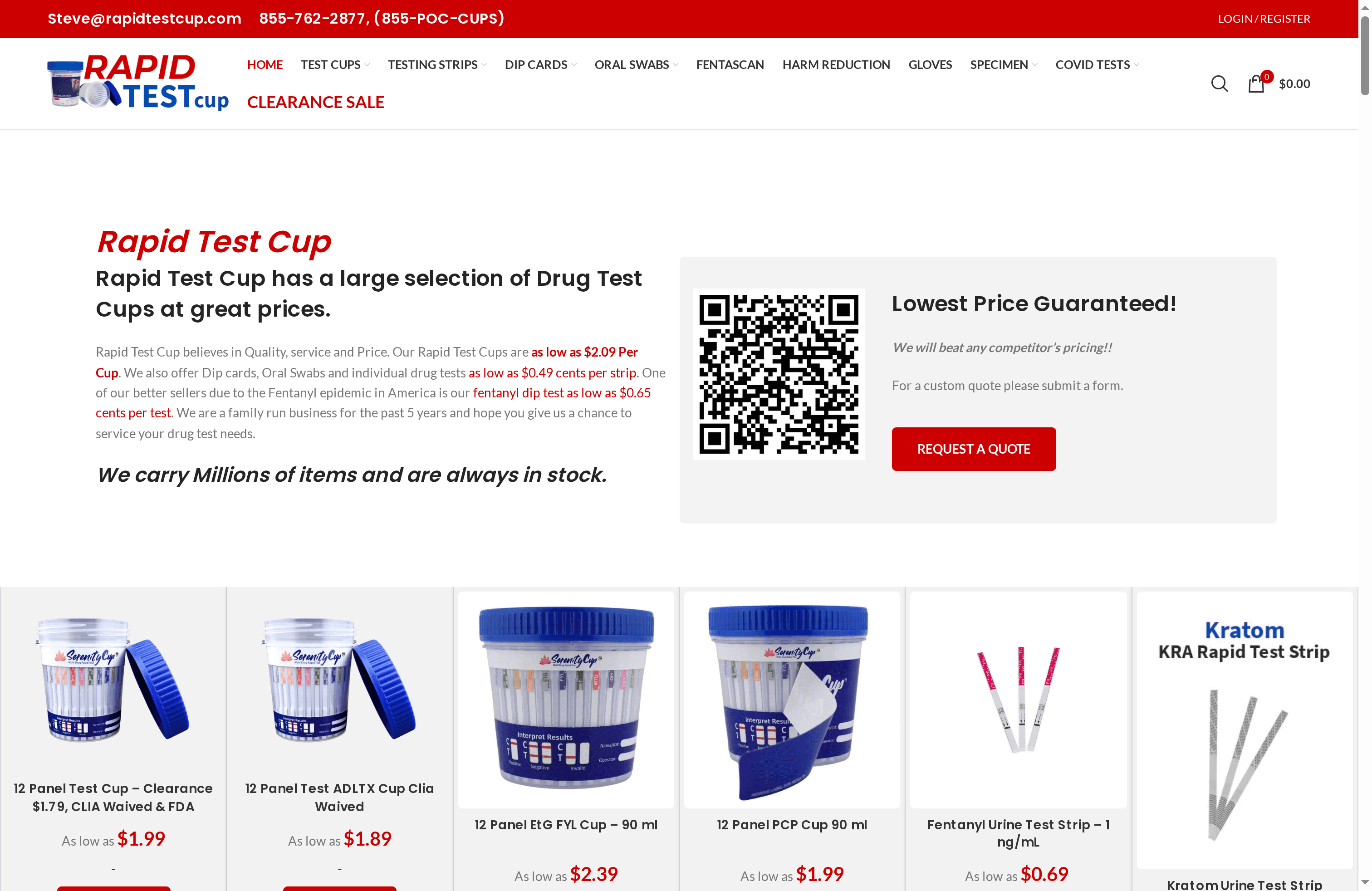
All our products meet FDA standards and CLIA waiver requirements, integrating seamlessly into compliant laboratory workflows. Browse our full catalog to find testing solutions that match your specific quality control requirements and workflow design for 2026.
Frequently asked questions
What is the difference between immunoassay and mass spectrometry in drug testing?
Immunoassay testing uses antibody reactions to detect drug classes quickly with minimal sample preparation, making it ideal for high-volume screening. Mass spectrometry separates and identifies specific compounds by their molecular properties, providing definitive identification with superior specificity. Most laboratories use immunoassays for initial screening and reserve mass spectrometry for confirmation of non-negative results.
How often should quality control materials be run alongside patient samples?
Run quality control materials at least once per day of testing, or once per shift if you operate continuously. Some high-risk applications or regulatory requirements may mandate QC with each batch or run. Check your specific accreditation standards and manufacturer recommendations to determine the appropriate frequency for your laboratory setting and test methods.
What are common causes of false positives in immunoassay drug tests?
Cross-reactivity with structurally similar molecules represents the primary cause of false positives in immunoassay testing. Over-the-counter medications, prescription drugs, and dietary supplements can trigger antibody responses intended for illicit substances. This limitation makes confirmatory testing with mass spectrometry essential when positive results will impact medical treatment, employment, or legal proceedings.
What regulatory updates impact drug test quality control workflows in 2026?
CMS released updates to Appendix C of State Operations Manual with new guidance for laboratories in 2025. These revisions clarify expectations for quality control frequency, personnel competency assessment, and proficiency testing participation. The updates remove outdated guidance while adding specific requirements for emerging testing technologies, affecting how you document and execute your quality control procedures in 2026.