

Blog
How drug testing improves substance abuse program outcomes

TL;DR:
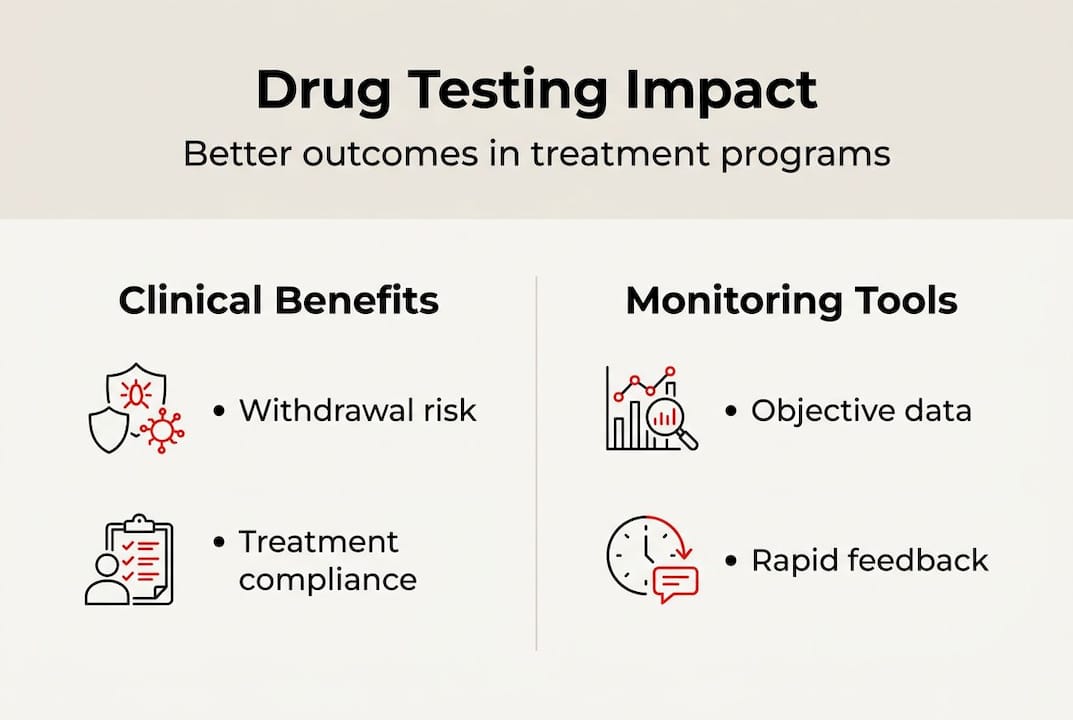
- Drug testing provides objective data to improve patient assessment and treatment decisions.
- Regular, randomized testing enhances engagement and reduces relapse risk in treatment programs.
- Proper interpretation and compassionate use of results support recovery rather than punishment.
Substance abuse programs have always relied on patient self-reports, clinical interviews, and medical exams to drive decisions. But that picture is incomplete without objective data. Drug testing fills that gap, transforming guesswork into evidence-based decisions that directly shape care. According to the ASAM criteria framework, effective programs use multidimensional assessment tools that integrate toxicology results with medical history and behavioral observations. This guide breaks down how smart programs use drug testing not just for compliance, but as a clinical instrument that improves patient outcomes at every stage of care.
Table of Contents
- A framework for effective substance abuse program assessment
- How drug testing supports better treatment outcomes
- Drug testing methods, mechanics, and best practices
- Integrating drug testing into diverse program settings
- The overlooked value of drug testing: it’s about engagement, not enforcement
- Upgrade your drug testing workflow for better results
- Frequently asked questions
Key Takeaways
| Point | Details |
|---|---|
| Objective monitoring tool | Drug testing gives reliable, actionable data that supports individualized treatment. |
| Framework integration | Programs succeed when drug testing fits into structured assessment models like ASAM’s dimensions. |
| Enhanced outcomes | Routine, random testing and contingency management statistically improve abstinence and retention rates. |
| Best practices matter | Careful method selection, tamper detection, confirmatory testing, and MRO review are essential for accuracy and fairness. |
| Therapeutic, not punitive | Testing should focus on engaging clients and fostering progress, not punishment. |
A framework for effective substance abuse program assessment
Modern substance abuse programs do not operate on intuition alone. The most effective ones follow structured assessment frameworks, and the most widely adopted is the American Society of Addiction Medicine (ASAM) criteria. This model evaluates patients across six dimensions to determine the right level of care and monitor ongoing progress.
The six ASAM dimensions are:
- Dimension 1: Acute intoxication and withdrawal potential
- Dimension 2: Biomedical conditions and complications
- Dimension 3: Emotional, behavioral, and cognitive conditions
- Dimension 4: Readiness to change
- Dimension 5: Relapse, continued use, or continued problem potential
- Dimension 6: Recovery and living environment
Drug testing is directly relevant to at least three of these dimensions. Toxicology results inform withdrawal risk under Dimension 1, reveal underlying polysubstance use under Dimension 2, and give hard data on relapse risk under Dimension 5. When you combine screening methods in treatment with clinical interviews and patient history, you build a much clearer picture of what a patient actually needs versus what they report needing.
Here is how drug testing fits across different program stages:
| Program stage | Drug testing function | Clinical benefit |
|---|---|---|
| Initial assessment | Detect current substances in use | Confirms or challenges patient self-report |
| Ongoing monitoring | Track adherence to prescribed medications | Identifies non-compliance or diversion risk |
| Level-of-care transitions | Verify stability before reducing intensity | Reduces premature discharge risk |
| Discharge planning | Confirm sustained abstinence | Supports relapse prevention documentation |
Pro Tip: Do not treat initial assessment toxicology as a one-time formality. Use it as the opening of a clinical conversation about substance use patterns, not just a checkbox.
The ASAM framework reinforces that level-of-care decisions should be fluid and responsive. A patient who tests positive for an undisclosed substance during ongoing monitoring may need a higher intensity of service, not a punitive consequence. That distinction matters enormously for how your team interprets and acts on results.
How drug testing supports better treatment outcomes
The idea that drug testing is just an administrative task misses its real clinical function. Drug testing is a routine, essential component of treatment for initial assessment, monitoring adherence, detecting unreported use, and informing adjustments throughout the treatment episode. It is one of the few tools that gives clinicians objective feedback in an environment where denial and minimization are common patient behaviors.
One of the most evidence-supported applications is contingency management (CM). In CM programs, drug test results serve as the verification mechanism for reward systems that reinforce abstinence. Research shows CM produces a medium effect on both abstinence (SMD of 0.57 to 0.65) and treatment retention (SMD of 0.67) during the treatment period. That is clinically meaningful. Without reliable, timely drug test results, CM cannot function.
Here is a practical numbered workflow for integrating drug testing into a CM model:
- Establish baseline: Conduct a comprehensive toxicology screen at intake to document the full substance use picture.
- Set clear expectations: Explain to patients that testing is a treatment tool, not surveillance, and that results will guide rewards and care adjustments.
- Test randomly and frequently early in treatment: Early recovery is the highest-risk period. Frequent objective monitoring catches slips before they become relapses.
- Document and respond therapeutically: Use positive results as a trigger for a clinical conversation, not a disciplinary action.
- Reward verified negative results: In CM programs, connect each verified negative test to a tangible reward, escalating for consecutive clean tests.
- Adjust care intensity based on patterns: A string of positive tests should prompt a level-of-care review, not just a warning.
“Urine drug testing is the most common and clinically practical method for monitoring substance use in treatment settings, but its value depends entirely on how results are interpreted and used.” — National Center for Biotechnology Information
The role of drug testing in rehab extends beyond catching use. It also confirms that patients are taking prescribed medications like buprenorphine or naltrexone as directed. Diversion of medication-assisted treatment (MAT) drugs is a real concern, and negative results for a prescribed medication are just as clinically significant as a positive for an illicit substance.
Understanding the importance of rapid testing comes into focus when you consider the need for real-time clinical decisions. When a patient arrives at a session showing behavioral signs of intoxication, waiting 48 to 72 hours for a lab result does not serve them. An onsite rapid test gives you what you need in minutes.
Drug testing methods, mechanics, and best practices
Getting drug testing right in a clinical setting requires more than ordering test cups. You need to understand the full process from collection to result interpretation so your team can act on data with confidence.
The standard process works in two stages. First, an immunoassay screening test provides a rapid result. Then, if confirmation is needed, a gas chromatography-mass spectrometry (GC-MS) or liquid chromatography-tandem mass spectrometry (LC-MS/MS) laboratory test verifies the finding with high specificity. Immunoassay screening followed by confirmatory GC-MS or LC-MS/MS is the clinical standard, and a Medical Review Officer (MRO) plays a critical role in reviewing results while accounting for legitimate medical explanations.
Here is a comparison of onsite versus lab-based testing for treatment programs:
| Factor | Onsite rapid test | Lab-based confirmation |
|---|---|---|
| Turnaround time | 5 to 10 minutes | 24 to 72 hours |
| Cost per test | Low | Higher |
| Accuracy | High for screening | Definitive |
| Best use case | Routine monitoring | Disputed results, legal documentation |
| Panels available | Up to 18+ drugs | Highly customizable |
Common pitfalls in treatment program testing include:
- Overreliance on instant results: Positive screens must be confirmed before clinical or legal action.
- Ignoring validity testing: Adulterant checks detect diluted, substituted, or chemically altered specimens.
- Punitive use of results: This damages the therapeutic alliance and increases dropout risk.
- Inconsistent collection procedures: Observed collection for high-risk patients prevents tampering and protects result integrity.
False positives and negatives require confirmation testing before acting on a result, and certain populations like adolescents require especially careful handling. Adolescents tend to underreport use more than adults, making objective testing more clinically necessary. At the same time, results should be shared with appropriate sensitivity and always framed as a tool for helping, not shaming.
Pro Tip: Build a standard operating procedure for handling positive test results that every staff member follows. Inconsistency in how positives are handled erodes patient trust and creates legal exposure.
A well-designed random testing workflow also removes staff bias from the equation. When patients know that any visit could involve a test, the deterrent effect works without singling anyone out. Randomization preserves fairness and maintains the clinical purpose of the testing protocol.
Integrating drug testing into diverse program settings
Not all substance abuse programs are the same. An outpatient counseling center, a residential treatment facility, and an opioid treatment program (OTP) each have different regulatory requirements, patient populations, and resource constraints. Effective drug testing integration must account for all of these variables.
Research on testing frequency shows that weekly testing detects significantly more unreported use than biweekly testing, with no meaningful difference in self-reported use between the two schedules. Interestingly, the same research suggests that testing approximately half of patients randomly is as cost-effective as testing everyone. That is a practical insight for programs managing tight budgets without sacrificing monitoring quality.
Here are practical steps for implementing a frequency and randomization strategy:
- Risk stratify your caseload: New admissions and high-risk patients warrant more frequent testing. Stable long-term patients may need only monthly checks.
- Use a random number system or software: Remove human decision-making from who gets tested and when.
- Build testing into session scheduling: Treat it as a clinical procedure, not an add-on.
- Review your data quarterly: Look for patterns across your population and adjust frequency protocols based on what the data shows.
For OTPs operating under federal oversight, SAMHSA’s 42 CFR Part 8 guidelines emphasize that toxicology results should inform but not automatically dictate take-home dose decisions. Clinical judgment remains central. A positive test result for a patient on methadone maintenance does not automatically mean take-home privileges are revoked. It means a clinical conversation needs to happen, and the full context of the patient’s situation must be reviewed.
Ethical considerations in drug testing integration include:
- Informed consent and transparency: Patients should understand the testing protocol before entering the program.
- Confidentiality protections: Results must be handled in compliance with 42 CFR Part 2 and HIPAA.
- Non-punitive framing: The stated purpose of testing should always be therapeutic monitoring and support.
- Culturally sensitive communication: How you deliver results and discuss them matters as much as the results themselves.
Smart budgeting for drug testing frequency does not mean cutting corners. It means being strategic about when you test, who you test, and what panels you use. An 18-panel test may be necessary at intake but a 10-panel may be sufficient for routine monitoring of a patient with a single-substance history.
The overlooked value of drug testing: it’s about engagement, not enforcement
Here is something the broader conversation about drug testing often misses. The most important thing a positive drug test does in a clinical setting is not flag a rule violation. It opens a door.
Many patients in substance abuse treatment struggle to disclose relapse or continued use because they fear consequences, judgment, or losing their place in the program. A positive test result removes the pressure of confession. It gives the clinician a concrete, non-accusatory fact to work with. “Your test showed opioids today. Let’s talk about what’s been happening this week.” That is a fundamentally different conversation than one that starts with suspicion or accusation.
Appropriate use of drug testing in clinical settings emphasizes the therapeutic, not punitive, application of results. The contrast with workplace drug testing is instructive. In a workplace context, a positive result may mean termination, so confirmation testing is always mandatory and legal standards are strict. In a clinical context, the goal is to adjust care and support the patient. Those two environments demand different approaches, and conflating them is a genuine clinical mistake.
What does good drug testing culture look like in practice? It looks like a counselor who reviews a positive result with curiosity rather than frustration. It looks like a program policy that ties positive results to treatment adjustments rather than automatic sanctions. It looks like patients who trust that their test results will be used to help them, not harm them.
The screening benefits extend beyond catching use. Regular, structured testing normalizes accountability as a feature of recovery rather than a threat. Patients who understand that testing is part of their care plan, and who see their counselors respond to results with clinical skill and compassion, are more likely to stay engaged and less likely to drop out when things get hard.
The real risk in current practice is not that programs test too much. It is that too many programs still use testing as a hammer when it should be a compass.
Upgrade your drug testing workflow for better results
Your testing protocol is only as effective as the tools behind it. Using reliable, high-sensitivity test cups designed for clinical accuracy makes a measurable difference in both workflow efficiency and result integrity.
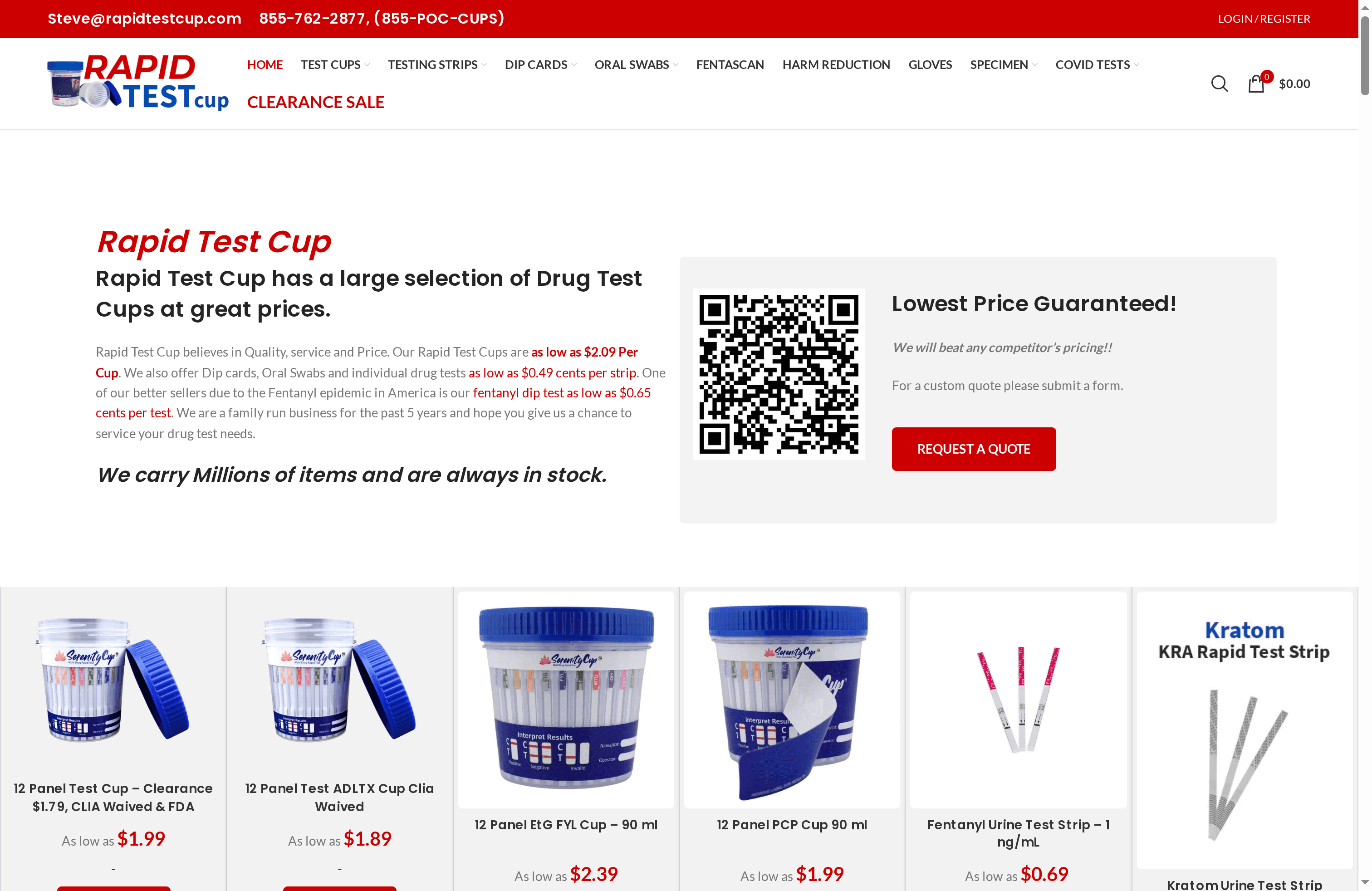
At Rapid Test Cup, we supply substance abuse programs with CLIA waived, FDA-approved testing solutions built for the demands of clinical environments. Whether you need a 12-panel drug test cup for routine monitoring or an 18-panel cup with adulterant detection for comprehensive intake screening, we have options that match your program’s clinical goals and budget. Bulk pricing, fast shipping, and consistent stock availability mean your team never has to compromise on testing quality or scramble for supplies. Upgrade your program’s testing workflow today and give your clinical team the objective data they need to make a real difference.
Frequently asked questions
What is the primary function of drug testing in substance abuse programs?
Drug testing provides objective data for initial assessment, monitors treatment compliance, and guides therapeutic adjustments. It fills the gap that self-reporting alone cannot, giving clinicians a reliable basis for level-of-care decisions.
How often should drug testing be conducted in treatment programs?
Weekly random testing is optimal in early treatment, as weekly testing detects significantly more unreported use than biweekly schedules. Stable patients may move to less frequent monitoring as treatment progresses.
Can drug test results be used to punish clients?
Drug testing should never be used punitively in a clinical setting. The evidence is clear that punitive use of results damages the therapeutic relationship and reduces the effectiveness of treatment.
How reliable are instant drug test results?
Instant immunoassay tests are highly reliable for screening, but positive results must always be confirmed by confirmatory GC-MS testing before any significant clinical or legal action is taken.
Are there special considerations for adolescents in drug testing?
Adolescents underreport substance use more often than adults, making objective testing particularly valuable in this population. Results must be handled with sensitivity, and adolescents benefit more from a supportive, non-punitive approach to disclosure.