

Blog
Substance Detection Windows: What You Need to Know


TL;DR:
- Detection windows vary widely based on substance, specimen type, and individual factors. Urine tests show drugs like cocaine for 2–4 days and THC for up to a week, while hair tests detect use over approximately 90 days. Complete abstinence remains the only certain way to produce a negative drug test result.
Substance detection windows are defined as the timeframes during which drugs or their metabolites remain identifiable in the body through biological testing. These windows vary widely by substance, dose, frequency of use, and the type of specimen collected. A urine test for cocaine produces a very different result than a hair test for the same substance taken at the same time. Understanding how detection windows work helps you interpret drug test results accurately, set realistic expectations, and make informed decisions about abstinence timing.
What are the typical substance detection windows in urine tests?
Urine testing is the most common drug screening method in clinical, workplace, and legal settings. Detection windows in urine are longer than in blood or saliva for most substances, which makes urine the preferred specimen type for most drug detection systems.
Common stimulants and opioids have shorter detection windows in urine compared to THC. Cocaine clears urine in roughly 2–4 days. Amphetamines remain detectable for 2–5 days. Opioids typically fall in the 1–4 day range. THC, by contrast, can stay detectable in urine for 1–7 days after a single use, and significantly longer with heavy or chronic use.
| Substance | Typical urine detection window |
|---|---|
| Cocaine | 2–4 days |
| Amphetamines | 2–5 days |
| Opioids | 1–4 days |
| THC (marijuana) | 1–7 days (single use) |
| Benzodiazepines | Up to 4 days |
| MDMA | 1–3 days |
| Barbiturates | 2–4 days (short-acting) |
These ranges reflect typical detection times for single or moderate use. Chronic use extends every window in the table above. THC is the clearest example: daily users can test positive for several weeks after stopping because THC accumulates in fat tissue and releases slowly.
Pro Tip: Benzodiazepine detection windows vary sharply by the specific drug. Short-acting versions like triazolam clear in days, while long-acting versions like diazepam can remain detectable for weeks. Always check the specific compound, not just the drug class.
How do detection windows differ across specimen types?
The specimen type collected determines how wide or narrow the detection window is. Blood, saliva, urine, and hair each capture drug exposure over different timeframes. Choosing the wrong test for the question being asked produces misleading results.
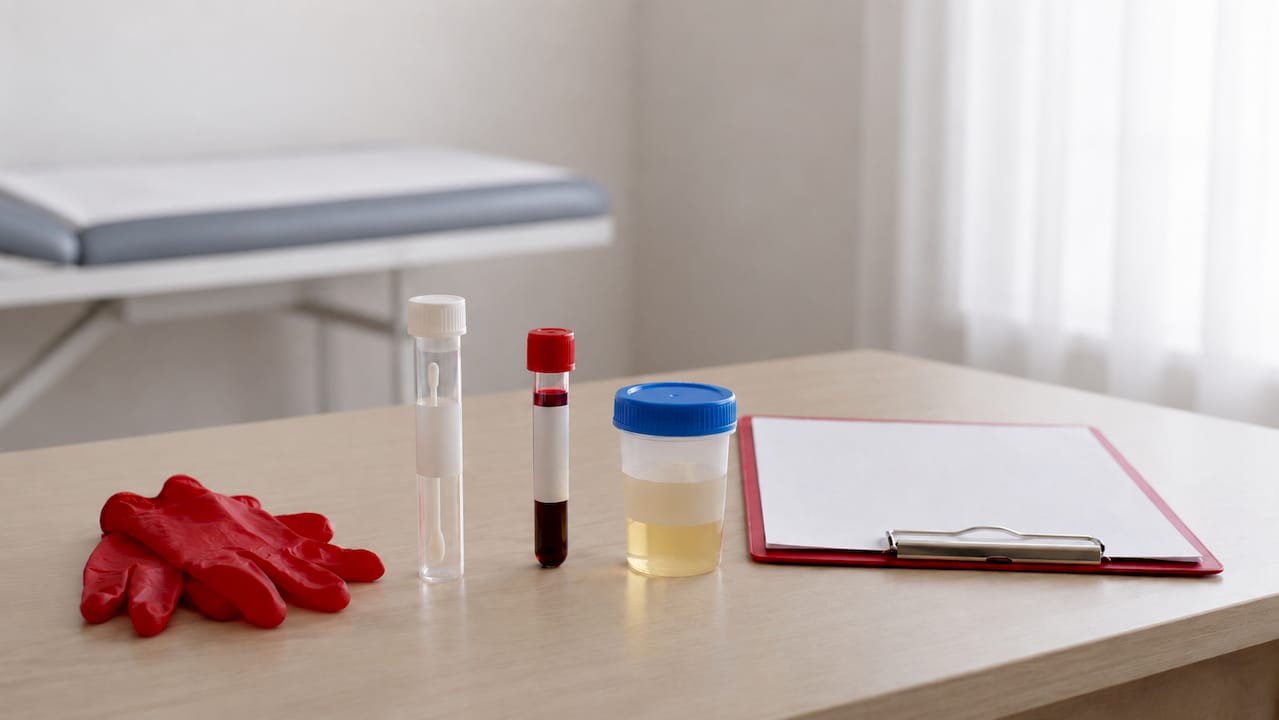
Saliva drug tests detect substances within minutes of use and can identify exposure for up to 48 hours. Drugs appear in oral fluid in less than one hour after use. This makes saliva testing useful for detecting very recent use, such as in roadside or post-incident screening.
Blood and plasma tests detect most drugs at low levels for only 1–2 days. Urine detection for the same substances lasts longer, from 1.5 to 4 days for a single dose. Blood testing is the most accurate for confirming current impairment, but its short window makes it less practical for routine workplace screening.
| Specimen type | Detection window | Best use case |
|---|---|---|
| Saliva | Less than 1 hour to 48 hours | Recent use, roadside testing |
| Blood | 1–2 days | Impairment confirmation |
| Urine | 1–7 days (substance dependent) | Routine screening |
| Hair | Up to 90 days | Long-term use history |
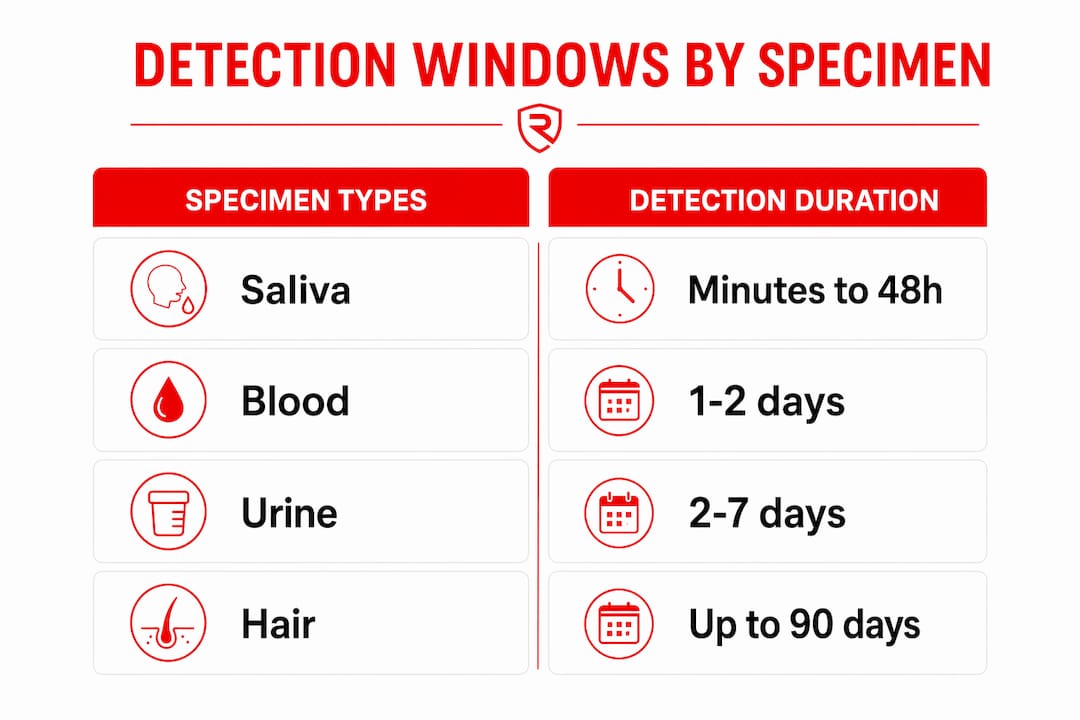
Hair testing stands apart from all other specimen types. A standard hair follicle test covers approximately 90 days of use history. Hair does not detect very recent use, since it takes about 7–10 days for drug metabolites to appear in a growing hair strand. Hair testing is used when a long-term pattern of use matters more than recent exposure. For interpreting urine drug test results accurately, understanding which specimen type was collected is the first step.
What factors influence detection windows?
Detection windows are estimates, not guarantees. Dose, frequency, body composition, age, and gender all shift how long a substance remains detectable. Two people who use the same drug at the same dose can produce very different test results three days later.
The drug half-life concept explains part of this variability. Half-life is the time it takes for the body to eliminate half of a drug’s concentration. A drug with a 6-hour half-life reaches very low levels in about 30–36 hours. However, detection windows require approximately 5–6 half-lives for full clearance. That means a drug is not necessarily undetectable just because its effects have worn off.
Several factors extend or shorten detection windows:
- Metabolism rate. Faster metabolizers clear drugs more quickly. Age, liver health, and genetics all affect metabolic speed.
- Body fat percentage. THC and other fat-soluble substances accumulate in fatty tissue and release slowly, extending detection time.
- Frequency of use. Chronic use builds up drug metabolite levels in the body, extending windows well beyond single-use estimates.
- Test sensitivity. A test calibrated to detect THC at 15 ng/mL will produce a positive result longer than one set at 50 ng/mL for the same person.
- Hydration and kidney function. Diluted urine can lower metabolite concentration temporarily, but does not eliminate the substance.
One of the most common misconceptions is that feeling sober means testing clean. Subjective effects last far less time than detectable metabolites remain in urine or hair. Cocaine’s euphoric effects last under an hour, but its metabolite benzoylecgonine stays detectable in urine for days. The body processes the drug long after the experience ends.
Pro Tip: Relying on detection window estimates to time a drug test is unreliable. Individual variation is too wide for any published range to serve as a personal guarantee.
How to interpret detection windows in real-world scenarios
Detection window knowledge has direct applications in employment, medical, and legal contexts. Each setting uses drug testing differently, and the stakes of a result vary significantly. Understanding the substance identification methods used in each context helps you ask the right questions.
In employment settings, pre-employment and random workplace tests almost always use urine. The detection windows in the urine table above apply directly. Employers are not testing for impairment at the moment of the test. They are testing for recent use within the detection window of the substances on the panel.
In medical settings, clinicians use drug screening to monitor treatment compliance or identify substance use disorders. A positive result for opioids in a pain management patient may confirm appropriate medication use, not misuse. Context changes the interpretation entirely. The substance abuse screening benefits in clinical programs depend on accurate result interpretation, not just a positive or negative read.
In legal contexts, courts and probation programs often require observed urine collection with strict chain-of-custody procedures. Detection windows matter here because a positive result must be defensible. Hair testing is sometimes ordered when a longer history of use is relevant to a legal proceeding.
Key points for applying detection window knowledge practically:
- Complete abstinence is the only reliable way to pass a drug test. No detection window estimate guarantees a negative result.
- The substance panel on the test determines which drugs are screened. A 5-panel test does not detect benzodiazepines unless specifically added.
- Specimen type determines the timeframe being examined. Requesting a hair test when recent use is the question produces a less useful result than a urine test.
- Adulteration of urine samples is detectable. Modern test cups include validity checks for creatinine, pH, and oxidants.
A drug screening workflow guide built around the right specimen type and panel selection produces far more useful data than one chosen arbitrarily.
Key Takeaways
Detection windows are estimates shaped by substance type, specimen collected, and individual biology. Complete abstinence remains the only reliable way to produce a negative drug test result.
| Point | Details |
|---|---|
| Windows vary by substance | THC stays detectable far longer than cocaine or opioids in urine tests. |
| Specimen type changes the window | Hair covers 90 days; saliva covers less than 48 hours for the same substance. |
| Half-life is not the whole story | Full clearance takes 5–6 half-lives, and metabolites outlast subjective effects. |
| Individual factors shift every estimate | Metabolism, body fat, frequency, and test sensitivity all alter detection times. |
| Abstinence is the only guarantee | No published detection window can reliably predict a personal test outcome. |
The gap between what people think they know and what the science says
The most persistent misunderstanding I see is treating published detection windows as personal timelines. People read “cocaine clears in 2–4 days” and treat day five as a safe date. That logic ignores everything that makes detection windows approximate in the first place.
Frequency of use alone can push cocaine metabolites well past four days in a heavy user. Add in slower metabolism, higher body fat, or a more sensitive test cutoff, and that “safe” date becomes meaningless. The published ranges describe populations, not individuals.
The second misunderstanding is conflating feeling sober with being clean on a test. These are completely different biological events. The drug’s active effects depend on blood concentration. The test result depends on metabolite concentration in urine or hair. Those two processes run on different timelines, and the test always runs longer.
My honest advice: use detection window data to understand the general shape of how substances clear the body. Use it to understand why a test was positive or negative. Do not use it to calculate a personal clearance date. The science does not support that level of precision for any individual.
— Justin
Rapidtestcup urine drug test kits for reliable screening
Knowing detection windows is only half the equation. The test itself must be accurate, properly calibrated, and matched to the right substances.
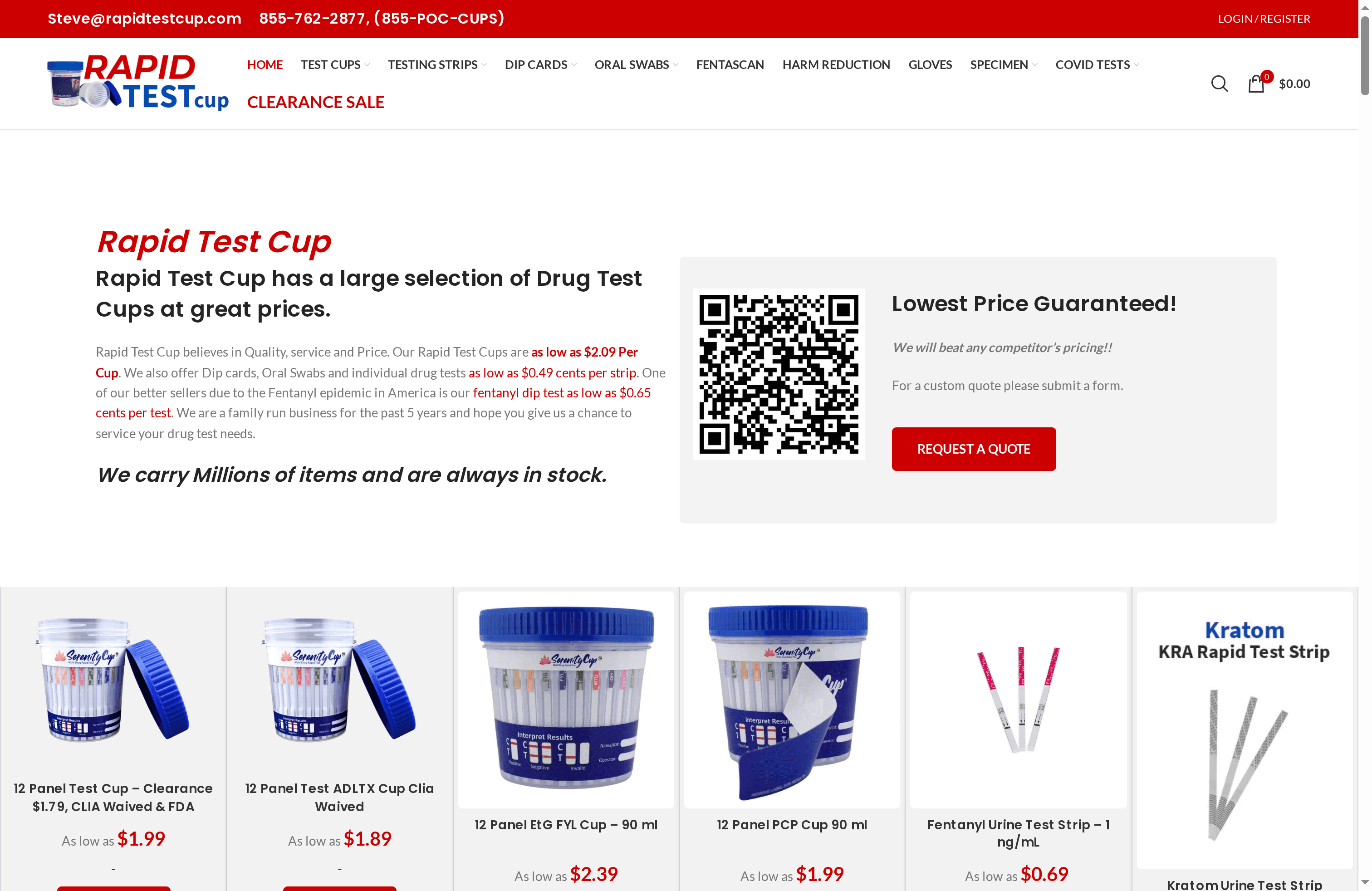
Rapidtestcup carries a full catalog of FDA-cleared, CLIA waived urine drug test kits built for clinical, workplace, and personal use. Multi-panel cups cover anywhere from 5 to 18 substances in a single collection, with built-in validity checks that flag adulterated samples. For anyone who needs to screen for substances within known detection windows, the top urine drug test kits comparison page breaks down panel options, cutoff levels, and formats side by side. Bulk pricing and fast shipping make Rapidtestcup a practical choice for programs that test regularly.
FAQ
What is a substance detection window?
A substance detection window is the period during which a drug or its metabolites remain identifiable in a biological specimen such as urine, blood, saliva, or hair. Windows vary by substance, dose, frequency of use, and specimen type.
How long does THC stay detectable in urine?
THC is detectable in urine for 1–7 days after a single use. Chronic daily use can extend that window significantly, sometimes to several weeks, because THC accumulates in fat tissue.
Why does hair testing have such a long detection window?
Hair retains drug metabolites as the strand grows, creating a historical record of use. A standard 1.5-inch hair sample covers approximately 90 days of exposure, far longer than any other specimen type.
Can you speed up drug clearance to pass a test sooner?
No reliable method exists to accelerate clearance beyond what the body does naturally. Complete abstinence is the only approach that guarantees a negative result, and individual variation makes any timeline estimate unreliable.
Does a positive drug test mean someone was impaired at the time of testing?
No. A positive urine or hair test confirms past exposure within the detection window, not current impairment. Subjective effects end long before metabolites clear the body, so a positive result reflects history, not present state.